QPR Football Formation
 Today, September 30, 2026


Starting Lineup
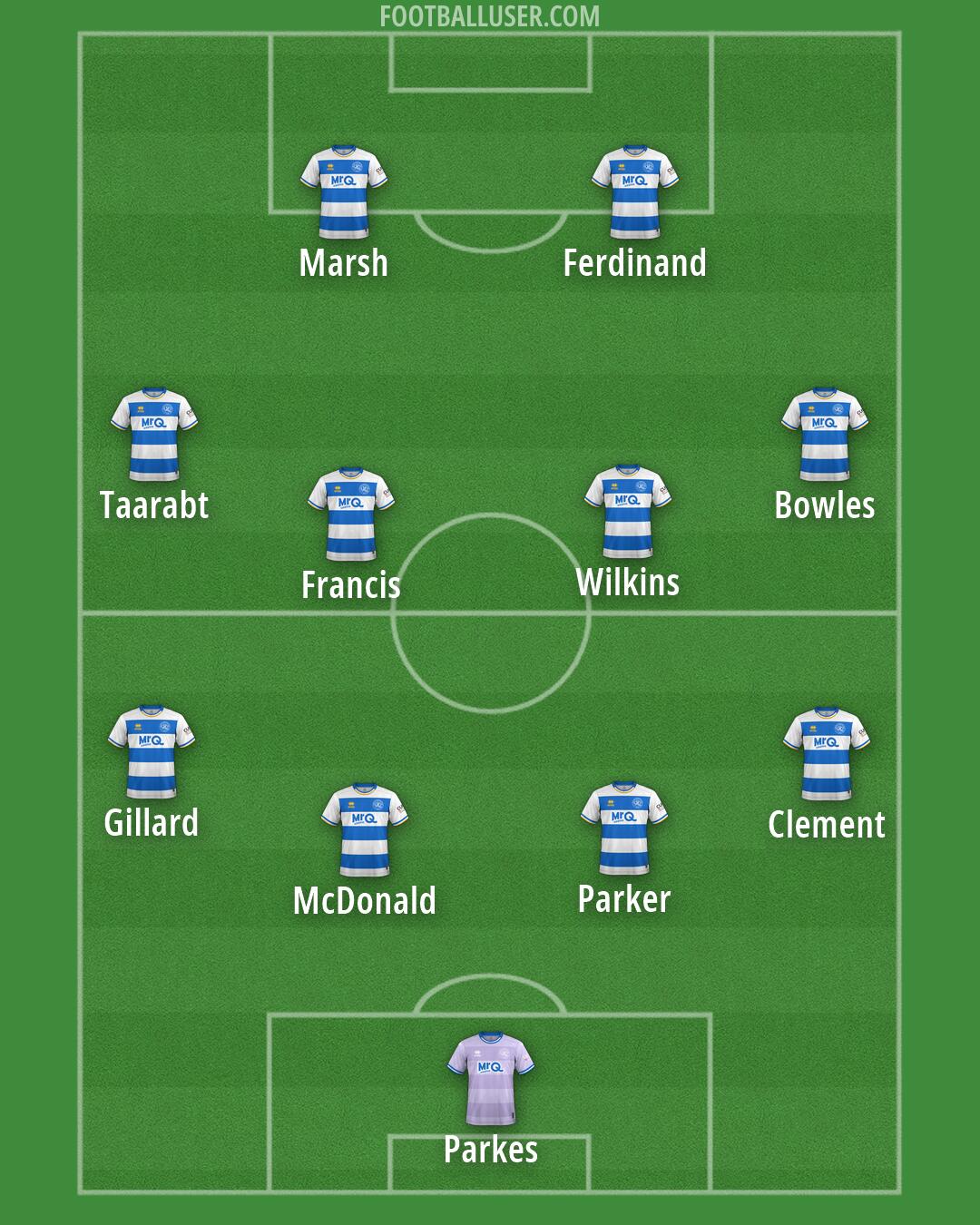
Parkes · Clement · Gillard · Parker · McDonald · Wilkins · Francis · Bowles · Taarabt · Ferdinand · MarshQPR looks to control the tempo through direct attacking play and heavy pressure, operating within a 4-4-2 formation. This lineup is built to use the width of the pitch to stretch opponents and create chances for the two forwards. The team aims to win the ball high up the pitch and move quickly into the final third.
Parkes stays between the posts to command the area and organize the back line. The defensive unit sits as a flat back four, where Clement acts as a right back to provide width and Gillard covers the left flank. McDonald and Parker operate as the central defensive pair, with McDonald acting as a ball playing defender to initiate play. They focus on holding a compact shape and winning the second ball to prevent opposition breakthroughs.
The midfield functions as a central block designed to control the center of the pitch. Francis and Wilkins form a central pairing where Francis works to shield the defense and Wilkins drives forward with the ball to link the lines. On the flanks, Taarabt and Bowles operate as wide midfielders who can pull wide to cross or cut inside to create central overloads. This midfield unit works to compress the midfield and disrupt the opponent's ability to pass through the lines.
QPR employs two forwards in a partnership to lead the line. Marsh and Ferdinand work together to pin the last defender, with Marsh often making runs in behind while Ferdinand works to hold up the ball and find the feet of the striker. The team attacks in combinations, using Taarabt and Bowles to supply service from wide areas. When the forwards press from the front, they aim to force a long ball and regain possession quickly in the attacking third.
One major strength of this 4-4-2 is the ability to create wide overloads when the full backs push up to support the wingers. The central pairing of Francis and Wilkins provides a solid base to recycle possession and protect against counter attacks. Additionally, the presence of Ferdinand allows the team to play more directly when needed, providing a target to win headers and launch attacks.
This formation relies on the work rate of the midfield and the individual creativity of the wide players. QPR is best suited for matches against teams that leave space behind their midfield or struggle to defend against direct combinations.