
PSG Football Formation
 Today, October 3, 2026


Starting Lineup
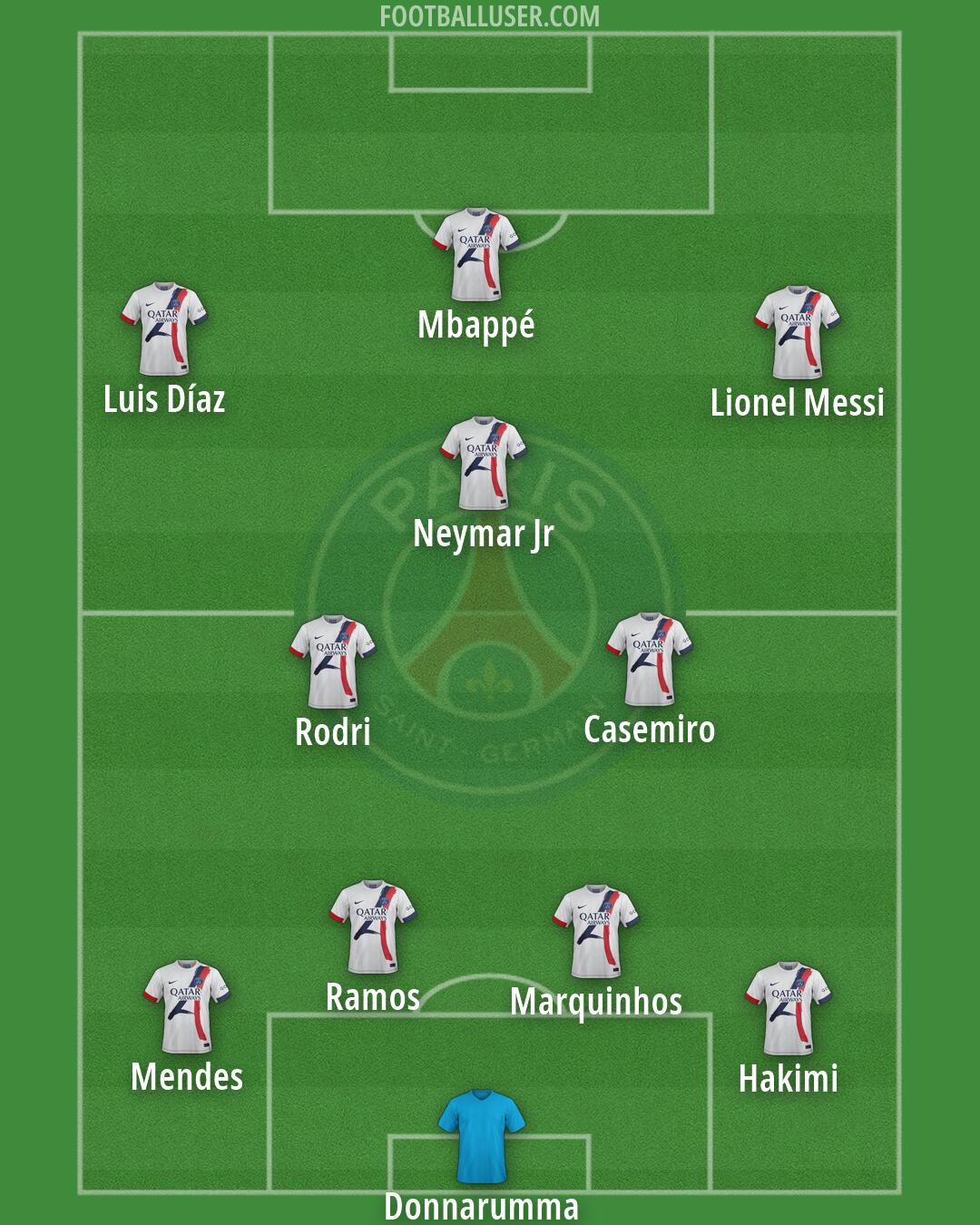
Donnarumma · Mendes · Hakimi · Ramos · Marquinhos · Rodri · Casemiro · Neymar Jr · Luis Díaz · Lionel Messi · MbappéPSG focuses on high pressing and quick transitions using a 4-3-3. This lineup is built to win the ball high up the pitch and use elite individual talent to break lines. The team aims to control games through aggressive movement and verticality.
Donnarumma starts between the posts to command the area. The back four operates with a high line to squeeze the space. Marquinhos acts as a ball playing defender with great positional sense, while Ramos provides aerial strength and aggression. Hakimi works as an attacking full back to provide width on the right, while Mendes overlaps on the left to stretch the defence. The defensive unit works together to maintain compactness and force long balls.
The midfield utilizes a three man midfield with a carrier and defensive specialists. Casemiro sits deep to shield the defence and win the second ball. Rodri operates as a deep lying playmaker to recycle possession and move the ball between the lines. Neymar Jr plays as an attacking ten behind the striker, drifting into half spaces to create chances. This trio links the defensive unit to the attack by driving the ball forward and controlling the tempo.
PSG uses three attackers across the front to pin the last defender. Mbappé operates as a pressing centre forward who looks to hit in behind on the transition. Luis Díaz plays as an inverted winger on the left to cut inside and create threats. Lionel Messi occupies the right wing, often pulling wide to switch play or driving into central areas to find the feet of the striker. The front three combine in tight spaces to create runs in behind and isolate defenders one on one.
A major advantage for PSG is the ability to press high in coordinated waves, forcing turnovers in dangerous areas. The team also benefits from wide overloads when Hakimi and Mendes push forward to support the wingers. This creates numerical superiority in the final third, allowing the players to combine effectively.
This formation relies on overwhelming opponents with pace and technical quality. It is best suited for matches against teams that play a high line or struggle to manage rapid transitions.