Custom Team Football Formation
 Today, October 13, 2026


Starting Lineup
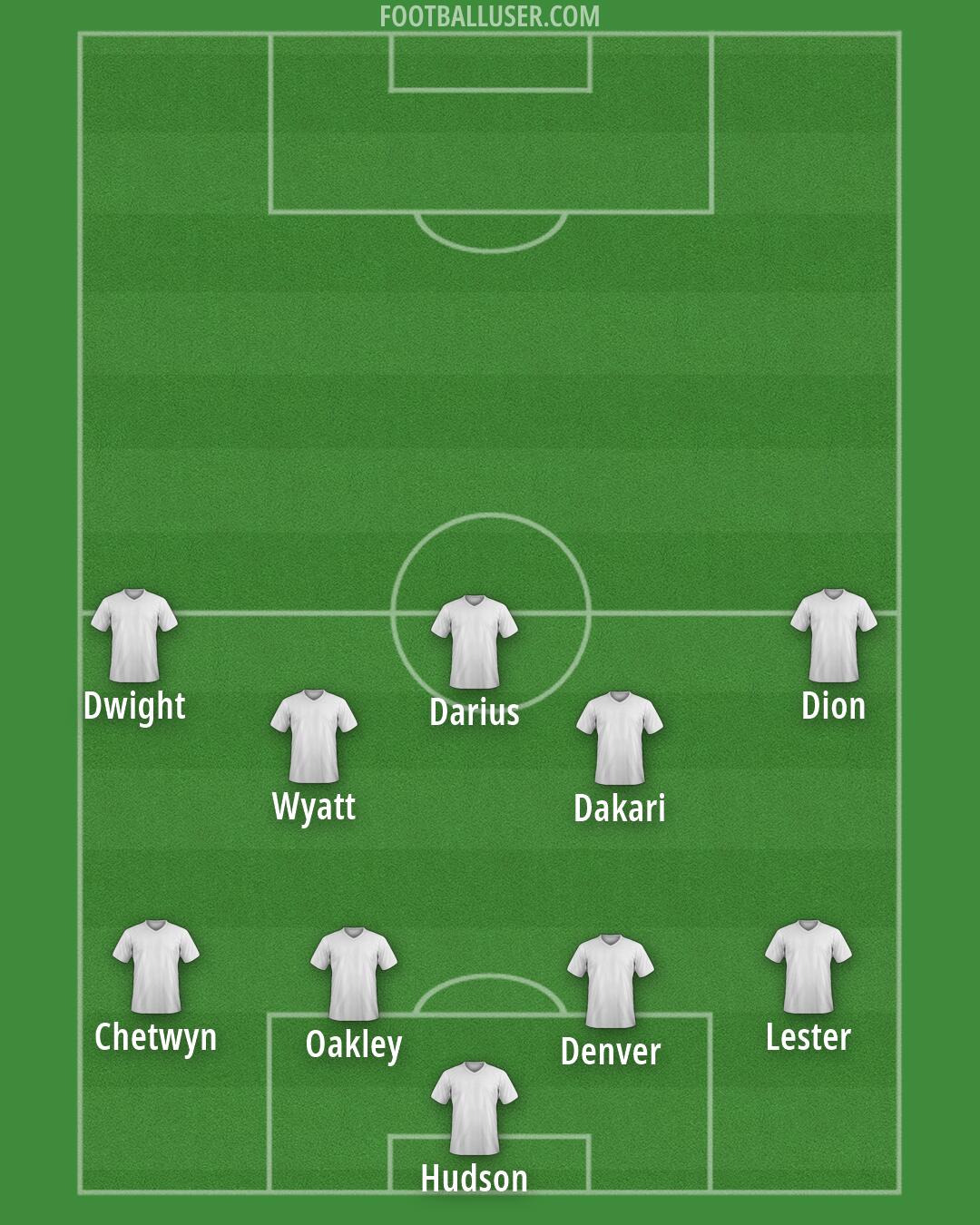
Dwight · Dion · Wyatt · Hudson · Wyatt · Lester · Denver · Chetwyn · Darius · Oakley · DakariA preference for directness and rapid transitions defines this 5-2-3 lineup. This formation is built to sit in a mid-block and wait for the opponent to commit before hitting them in behind. The team aims to use the width of the pitch to stretch the opposition and create space for runners to exploit.
Wyatt stays between the posts to command his area and organize the defensive unit. The back line operates as a narrow defensive block consisting of three central defenders. Denver and Oakley act as the wide centre-backs, while Hudson sits in the middle to sweep behind a high line and dominate in the air. Lester and Chetwyn act as attacking wing backs, pushing high up the pitch to provide width when the team has the ball. This unit works to stay compact and close the gaps between the lines to deny the turn to attacking midfielders.
The midfield functions as a double pivot to provide stability. Dakari and Wyatt work to shield the defence and win the second ball in the center of the pitch. Dakari often drives forward with the ball to carry it into the half spaces, while Wyatt stays deeper to recycle possession and connect the defensive and attacking lines. They must press in pairs to prevent the opposition from playing through the lines.
The attack relies on three attackers across the front to pin the last defender. Darius acts as a pressing centre-forward, working to harass the opposition back line and win the ball high up the pitch. Dwight and Dion play as wide wingers who stay high to threaten the flanks. Dwight tends to cut inside to create central presence, whereas Dion aims to get to the byline and deliver early crosses. This combination of players is designed to create runs in behind and isolate wide players in one on one situations during transitions.
One tactical advantage is the ability to use the wing backs to create wide overloads. When Lester and Chetwyn push forward, they force the opposition wingers to track back, often leaving their own full backs exposed. The formation also offers great compactness when defending a lead, as the five defenders can easily drop into a low block. This makes it very difficult for opponents to find space between the lines or through the middle.
This formation relies on a strong defensive unit and quick breaks to catch opponents out of position. It is best suited for games against possession based teams that leave space behind their high defensive line.