Blackpool Football Formation
 Today, October 14, 2026


Starting Lineup
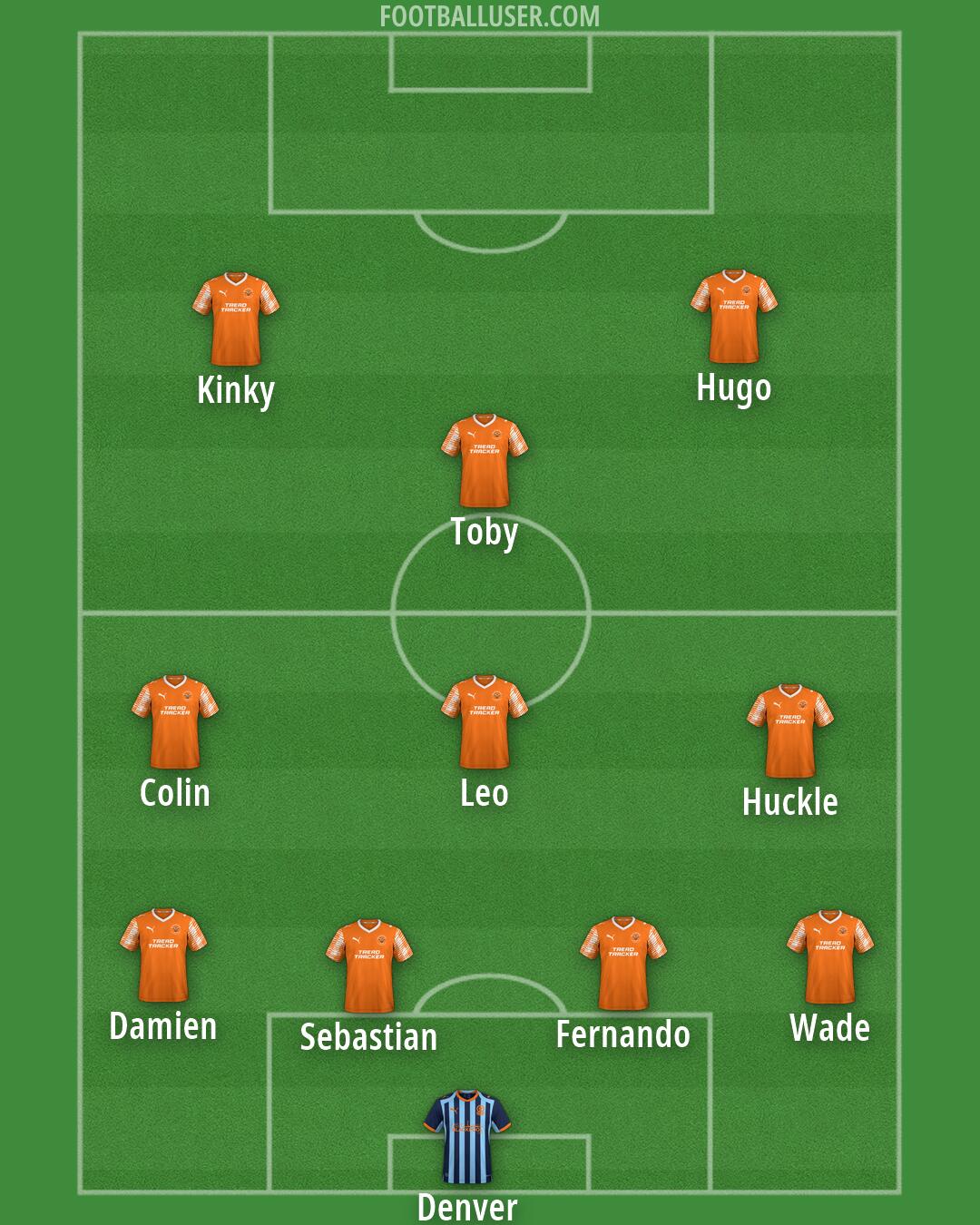
Denver · Damien · Wade · Fernando · Sebastian · Leo · Colin · Huckle · Toby · Kinky · HugoBlackpool focuses on direct play and heavy pressure using a 4-4-2 formation. The lineup is built to win second balls and hit the opposition quickly through the center or out wide. By maintaining a compact block, the team aims to squeeze the space in the middle of the pitch and force errors from the opponent.
Denver plays between the posts to organize the defensive line. The back four sits in a flat line to maintain team compactness. Wade and Damien act as full backs to cover the wide areas, while Sebastian and Fernando form the central pairing. Sebastian and Fernando must stay close together to defend zonally and ensure they do not get split by through balls. The unit works to hold the line and keep the distance between the defense and midfield small.
The midfield unit operates in two banks of four to control the central zones. Leo sits in the middle to link the defense and the attack, while Huckle and Colin work to cover the half spaces and press aggressively. Toby plays as an attacking ten behind the strikers, looking to find pockets of space between the opposition lines. This midfield group focuses on winning the ball back high up the pitch to catch the opponent out of position.
Blackpool utilizes two forwards in a partnership to stretch the opposition defense. Kinky and Hugo act as the primary goal threats, with Kinky looking to run in behind the last defender. Hugo often plays as a target man to hold up the ball and allow the midfielders to push forward. The two attackers press from the front to force a long ball from the opposition goalkeeper. This movement creates space for Toby to arrive late into the box and combine with the front two.
The formation offers Blackpool clear tactical advantages through its ability to press in a mid-block and win duels in the middle third. By using two strikers, the team can pin the last defender and create numerical superiority in the attacking third during transitions. The coordination between the wide midfielders and the full backs allows for quick switches of play to find isolated wide players.
This 4-4-2 lineup relies on high intensity and direct verticality to disrupt the opponent. It is best suited for games against teams that play a high line or struggle to manage pressure in their own defensive third.