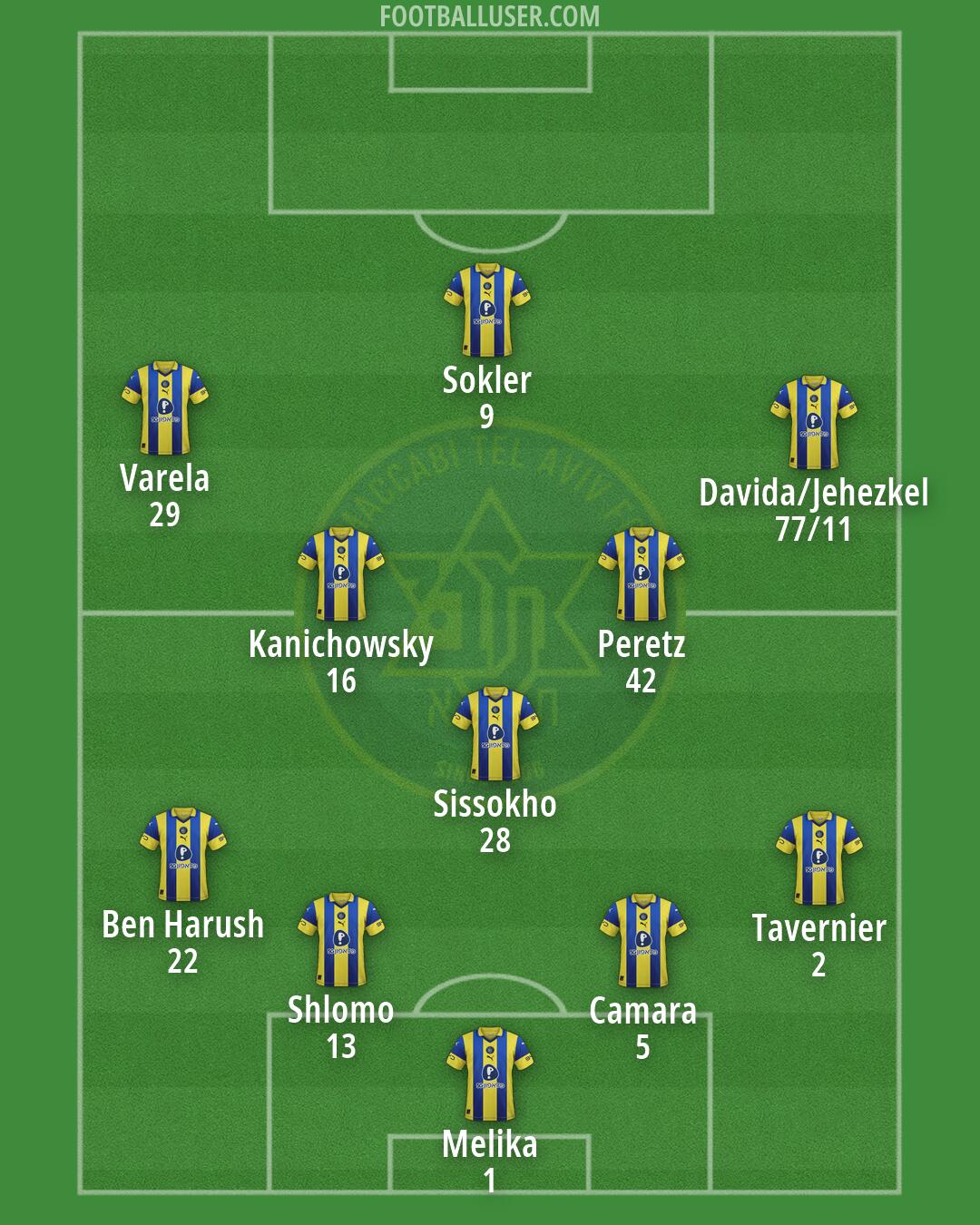

Maccabi Tel-Aviv Football Formation
 October 15, 2026


Starting Lineup
Peretz (42) · Sokler (9) · Kanichowsky (16) · Sissokho (28) · Davida/Jehezkel (77/11) · Shlomo (13) · Camara (5) · Ben Harush (22) · Melika (1) · Tavernier (2) · Varela (29)Maccabi Tel-Aviv focuses on verticality and quick transitions through a 5-2-3. This formation is built to absorb pressure and strike hard once the ball is won. The team looks to exploit spaces in behind the opposition defense by utilizing the speed of the attackers and the width provided by the wing backs.
Melika stays between the posts to organize the defensive unit. The back line functions as a back five where Sissokho acts as the central anchor to protect the zone. Camara plays as the right centre back to cover the space behind the wing back, while Shlomo operates on the left. Tavernier and Ben Harush serve as attacking wing backs, tasked to push high and provide width. This defensive line seeks to remain compact and squeeze the space between the defenders and the midfield.
The midfield consists of a two man central pairing with Peretz and Kanichowsky. Peretz works to shield the defense and win the second ball to allow for quick breaks. Kanichowsky acts as the link between the defense and the front line, looking to progress through the thirds with direct passes. They must work hard to cover the middle when the wing backs push forward, often shifting to prevent the opposition from playing through the center.
In the attacking phase, Maccabi Tel-Aviv uses three attackers across the front. Sokler acts as the lone striker, looking to hold up the ball and pin the last defender. Varela plays as an inverted winger on the left to cut inside, while Davida/Jehezkel operates on the right to stretch the play. These attackers press from the front to force a long ball from the opposition. The aim is to create runs in behind and allow the wing backs to deliver crosses into the box.
One major tactical advantage for Maccabi Tel-Aviv is the ability to create wide overloads when Tavernier and Ben Harush join the attack. This forces the opposition to defend a large area of the pitch. Additionally, the formation offers compactness when defending in a mid block, making it very difficult for opponents to find gaps between the lines. The speed of transition from the central pairing to the front three allows the team to hit opponents before they can settle.
This formation is designed for a team that wants to remain defensively solid while being lethal on the break. It is best suited for matches against dominant sides that leave space behind their high defensive line.