
Hansa Rostock Football Formation
 October 21, 2026


Starting Lineup
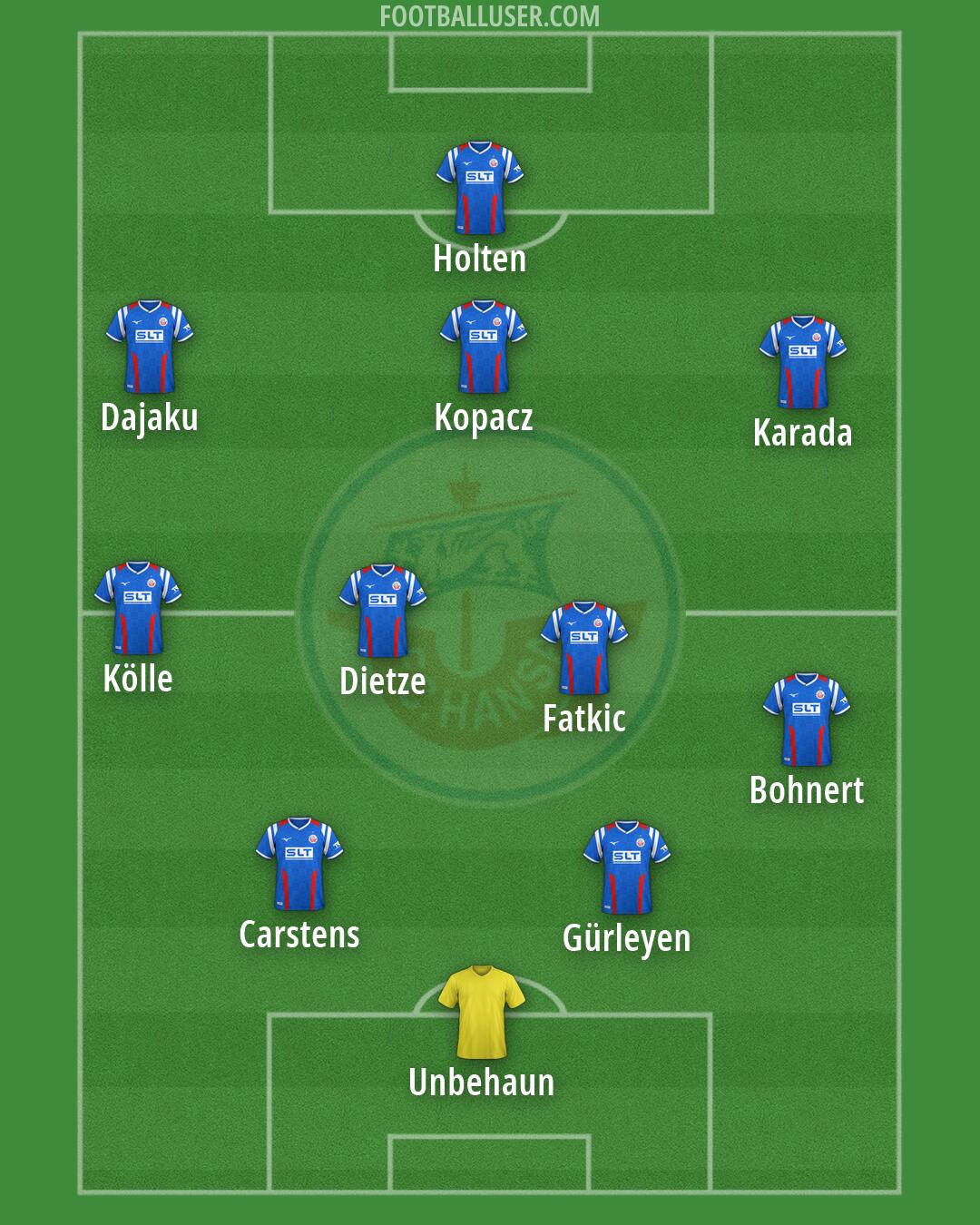
Unbehaun · Kölle · Carstens · Gürleyen · Bohnert · Dietze · Fatkic · Dajaku · Kopacz · Karada · HoltenHansa Rostock prioritizes a high press and direct attacking intent with a 2-4-4 formation. This lineup is built to win the ball back high up the pitch and immediately hit the opposition with numbers in the final third. The team looks to overwhelm opponents through verticality and heavy offensive pressure.
Unbehaun stays between the posts to act as the last line of defense. The back line operates with just two central defenders, Gürleyen and Carstens, who must defend in a high line to keep the team compact. These two roles require them to be dominant in the air and quick to cover space when the opposition tries to hit in behind. Because there are no full backs, Gürleyen and Carstens must be prepared to defend man to man or squeeze the space to prevent long balls from bypassing the midfield.
The midfield works as a four man block designed to control the center and protect the two defenders. Bohnert plays as the single pivot to shield the defense and recycle possession. Beside him, Dietze and Kölle operate in the half spaces to connect the defensive and attacking lines. Fatkic acts as a carrier to drive forward with the ball and link the central area to the front four. This group works together to press in a mid block and win the second ball to keep the pressure on the opponent.
Hansa Rostock utilizes a heavy front four to stretch the defense. Kopacz and Holten work as a partnership of two center forwards, often looking to find the feet of the striker or win the header during crosses. Dajaku and Karada operate as wide wingers who hug the touchline to create width. They aim to isolate the opposition wide players in one on one situations or pull wide to allow for cutbacks from the byline. This attacking unit is designed to press from the front and force a long ball that the central defenders can intercept.
This formation offers several tactical advantages. The heavy presence in the final third allows Hansa Rostock to create wide overloads and force the opposition into deep defensive positions. The midfield four provides the ability to press high in coordinated waves, making it difficult for opponents to play out from the back. By playing with four attackers, the team can pin the last defender and create constant chaos in the box.
This 2-4-4 formation is built for aggressive, high risk football that relies on winning the ball high up the pitch. It is best suited for games where the team needs to chase a result against a side that sits deep.