
Jihlava Football Formation
 Today, October 23, 2026
 sodomic33


Starting Lineup
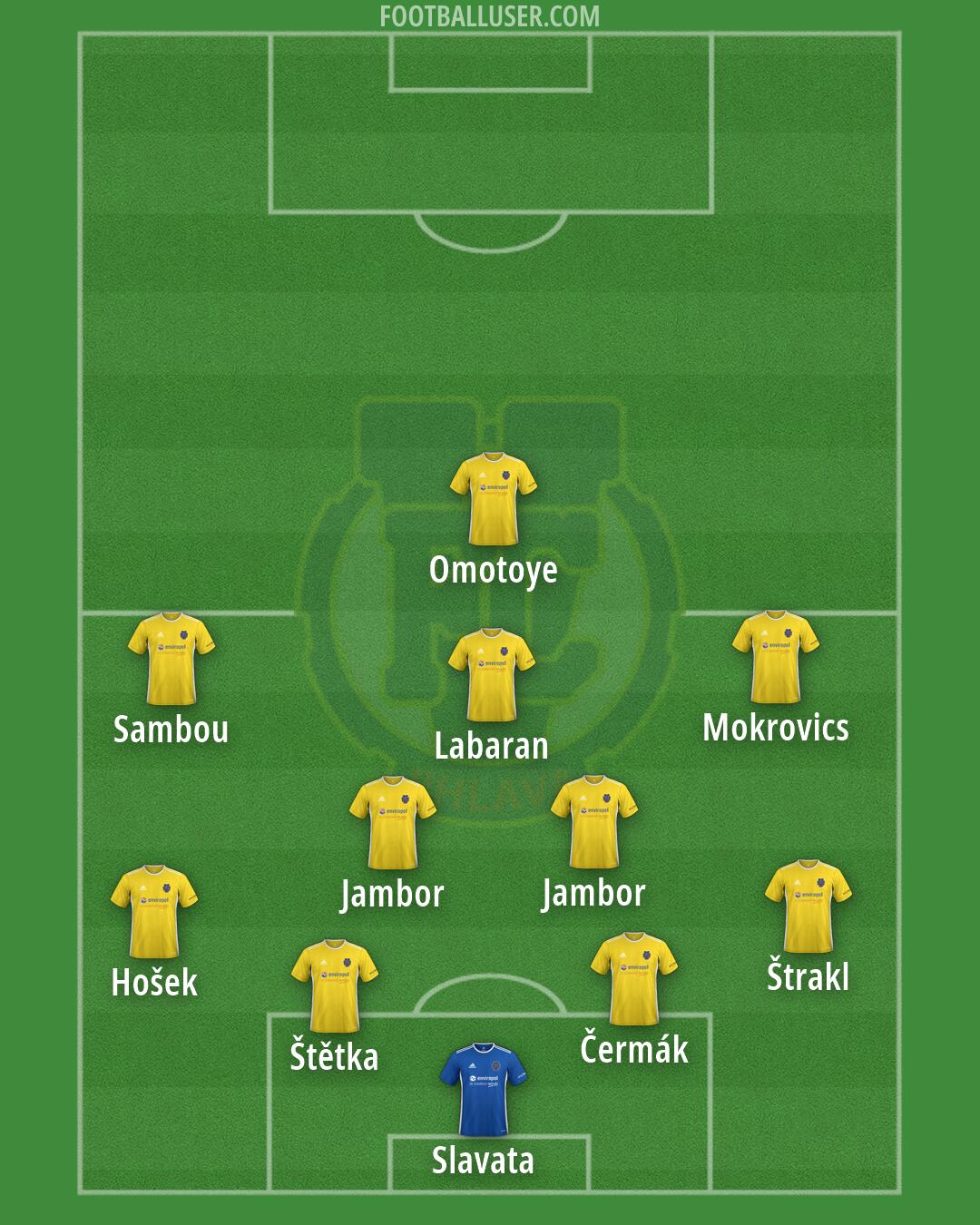
Slavata · Štrakl · Čermák · Štětka · Hošek · Jambor · Jambor · Labaran · Omotoye · Mokrovics · SambouJihlava aims to dominate territory through a heavy high press and a compact mid-block, utilizing a 4-5-1 formation. This lineup is built to deny space between the lines and force opponents into wide areas where they can be trapped. The tactical intent is to maintain high intensity to win the ball back quickly and strike on the transition.
Slavata operates between the posts to command the penalty area. The defensive unit sits in a flat back four consisting of Hošek on the left and Štrakl on the right. In the middle, Štětka and Čermák defend the central zone, working to win the second ball and clear the lines when under pressure. Hošek and Štrakl are tasked to hold the line and track back when the opposition tries to bypass the midfield. The unit works together to squeeze the space and prevent any direct runs through the center.
The midfield works in a dense five man block to control the center of the pitch. Jambor holds the pivot role, acting as the primary shield to protect the back four. Beside the pivot, Labaran, Sambou, and Mokrovics occupy the central and half spaces to compress the midfield. These players are responsible to press aggressively to win the ball high up the pitch and connect the defensive unit to the attack. They must work in pairs to pick up runners and deny the turn of the opposition playmakers.
Jihlava employs a lone striker in Omotoye to lead the line. He acts as a pressing centre-forward to pressure the opposition back line and disrupt their build up play. The wide players must tuck in to maintain the density of the formation, while the midfield looks to find the feet of the striker in tight spaces. When the team wins the ball, the goal is to move the ball forward quickly to find Omotoye in one on one situations or use cutbacks from the wide areas.
One major advantage for Jihlava is the ability to press high in coordinated waves, making it difficult for opponents to play out from the back. The numerical superiority in the central midfield zone allows the team to win the second ball and recycle possession effectively. This formation also provides compactness when defending, forcing the opposition to play long balls which the central defenders can intercept.
The 4-5-1 lineup focuses on defensive solidity and quick transitions through a crowded midfield. This setup is best suited for matches against teams that dominate possession and require a disciplined unit to frustrate their attacking rhythm.