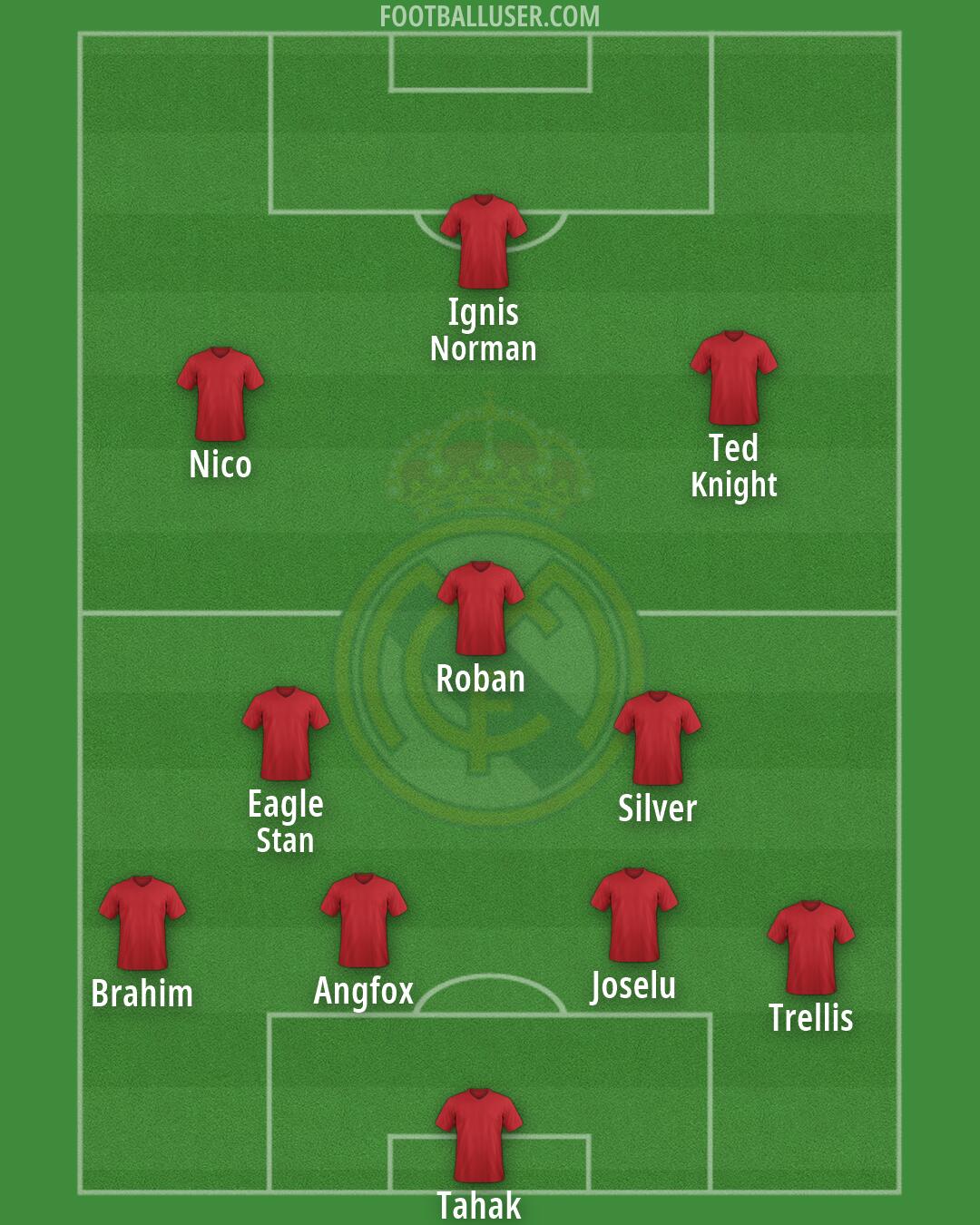

Real Madrid Football Formation
 Today, October 23, 2026


Starting Lineup
Ignis (Norman) · Ted (Knight) · Nico · Roban · Eagle (Stan) · Silver · Brahim · Angfox · Joselu · Trellis · TahakReal Madrid focuses on a vertical style of play designed to exploit transitions through a 4-3-3 formation. This lineup looks to win the ball back high up the pitch and move the ball forward with speed to catch the opposition out of position. The team relies on direct passing and quick movement to break the lines and create chances in the final third.
Tahak stays between the posts to command the area and organize the defensive line. The back four operates as a flat defensive line that can push up to squeeze the space. Joselu and Angfox act as the central defenders, with Joselu focusing on winning the header during defensive transitions and Angfox providing cover. Trellis and Brahim function as full backs who provide width, often looking to overlap the winger or underlap into the half spaces to create overloads.
The midfield is built around a three-man midfield with a carrier and an advanced playmaker. Eagle and Silver operate in the central areas to control the tempo and connect the defense to the attack. Silver works to shield the defense and recycle possession, while Eagle looks to drive forward with the ball to transition into the final third. Roban plays in the hole as an attacking ten behind the striker, looking to find space between the lines and arrive late into the box to score.
In the attacking third, Real Madrid uses three attackers across the front to stretch the defense. Ignis acts as the lone striker, working to hold up the ball and pin the last defender. Nico and Ted operate as wide wingers who look to cut inside and threaten the goal directly. The team builds the attack through quick combinations and relies on the wingers to isolate wide players in one on one situations. When the team loses the ball, Ignis and the wingers trigger a press to win it back quickly.
Real Madrid possesses several tactical advantages including the ability to press high in coordinated waves. The presence of Roban allows for numerical superiority in the attacking half, creating passing lanes that are difficult to close. The speed of transition when Silver or Eagle win the ball allows the team to hit in behind on the transition before the opponent can settle.
This formation is built for high intensity football that relies on quick verticality and winning second balls. It is best suited for games against opponents who play a high line and leave space behind their defensive unit.