Liverpool Football Formation
 Today, October 28, 2026


Starting Lineup
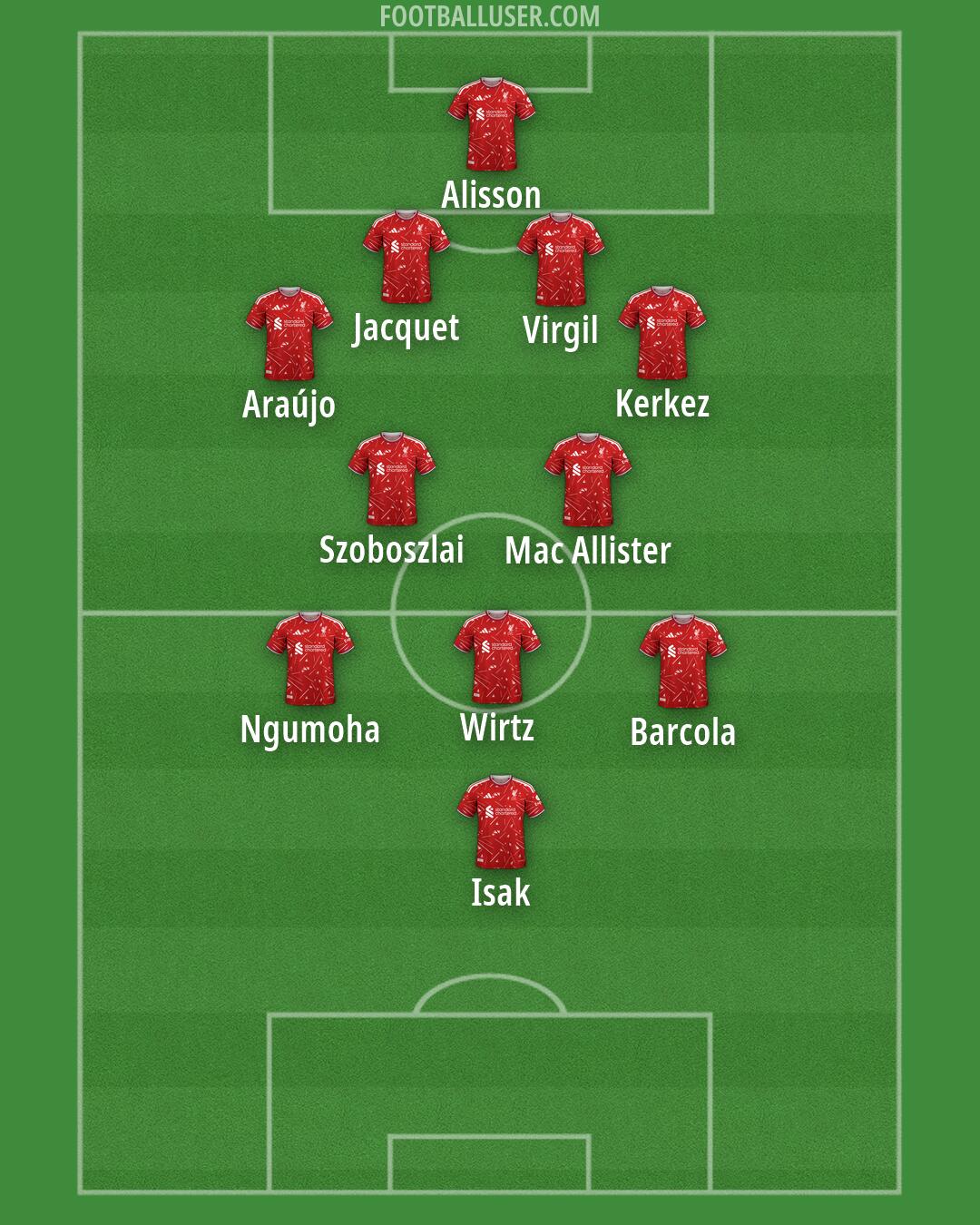
Ngumoha · Barcola · Isak · Wirtz · Jacquet · Araújo · Kerkez · Virgil · Alisson · Mac Allister · SzoboszlaiLiverpool relies on a heavy defensive block to absorb pressure before hitting opponents on the break, utilizing a 5-4-1 formation. This lineup is built to sit deep and stay compact, making it very difficult for opponents to play through the middle. The main idea is to limit space between the lines and wait for the right moment to launch a direct attack.
Isak plays between the posts to organize the back line. The defensive unit operates as a back five with Wirtz, Mac Allister, and Szoboszlai acting as the central defenders. Wirtz stays central to sweep behind the others, while Mac Allister and Szoboszlai provide physical presence to win the header and clear the lines. Barcola acts as a right wing back to provide width and recover defensively, while Ngumoha plays as the left wing back to cover the flank. This group works together to maintain a narrow defensive block when the opposition has the ball.
In front of the defense, Liverpool uses a flat midfield four to compress the space. Kerkez occupies the right side of the midfield while Araújo operates on the left to press the opposition wide players. The central area is controlled by Virgil and Jacquet, who act as a double pivot to shield the defense. Virgil is tasked to break the line with vertical passes, while Jacquet works to intercept plays and recycle possession. This midfield group links the deep defense to the lone attacker by winning the second ball and moving the play forward quickly.
The attacking phase focuses on Alisson as a lone striker who must hold up the ball to bring others into the game. Because the team plays with a single forward, the wide players like Barcola and Ngumoha must provide the necessary width to stretch the defense. When the team wins the ball back high up the pitch, the midfielders look to hit in behind on the transition. The aim is to find the feet of the striker or use quick combinations to move the ball from the midfield into the final third.
This formation offers significant tactical advantages through its extreme compactness when defending. By playing with five defenders and four midfielders, Liverpool can easily double up on wide players and deny the turn to attackers. Another strength is the ability to counter at pace once the ball is recovered in the middle of the pitch. This setup makes the team very hard to break down in low block situations.
Liverpool uses this 5-4-1 formation to frustrate teams that dominate possession. It is a setup best suited for facing heavy favorites or playing in away matches where defensive solidity is the priority.