Chelsea Football Formation
 Today, October 30, 2026


Starting Lineup
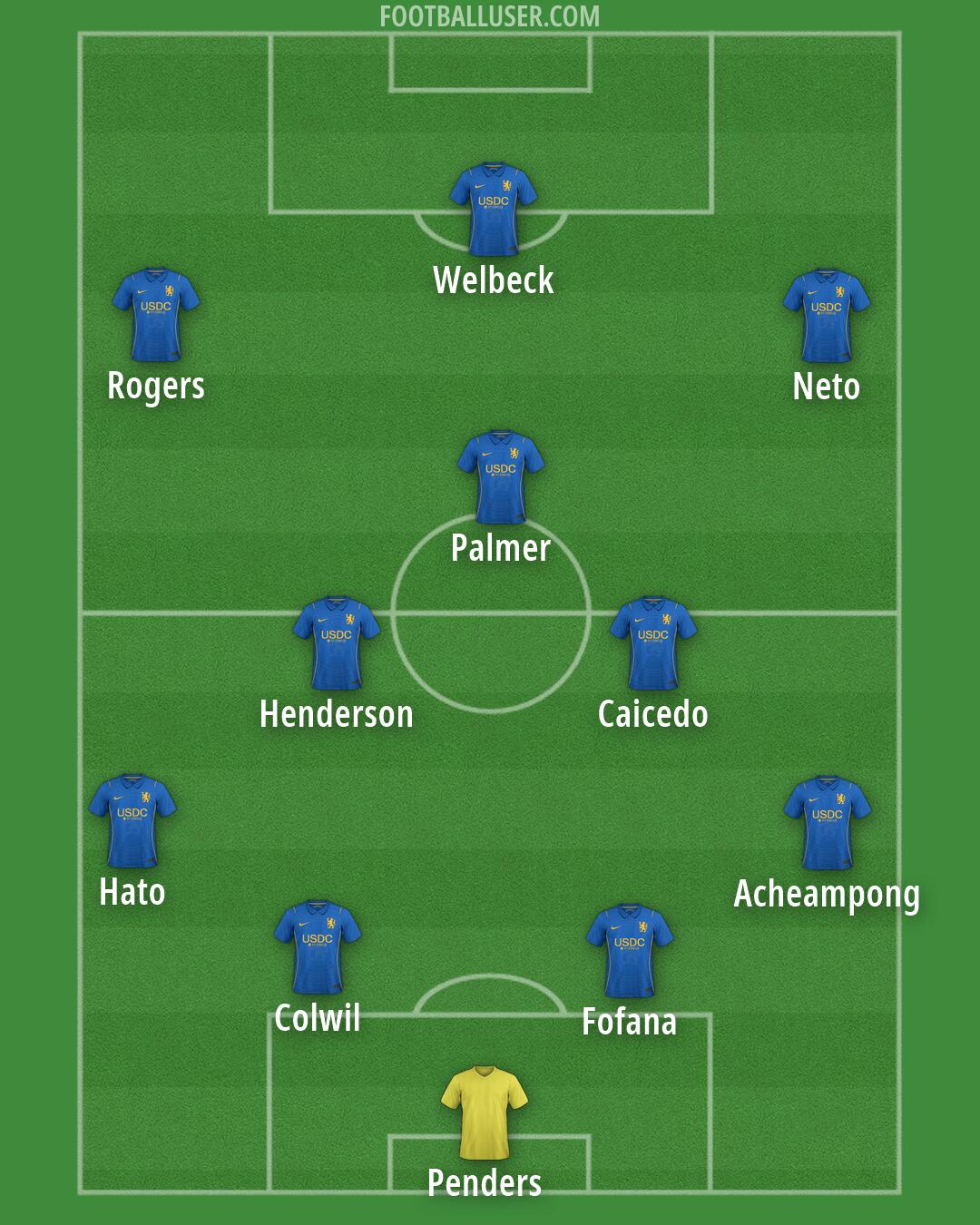
Penders · Hato · Colwil · Fofana · Acheampong · Henderson · Caicedo · Palmer · Rogers · Neto · WelbeckChelsea focuses on a high press and verticality with a 4-3-3 formation. This lineup is built to win the ball high up the pitch and break quickly through the middle. The team looks to use high energy to force turnovers and push the opposition back toward their own goal.
Penders starts between the posts to manage the defensive line. The back four consists of Acheampong at right back and Hato at left back. Fofana and Colwil operate as the central defenders in a flat back four. Fofana is often used to win headers and intercept passes, while Colwil acts as a ball playing defender to play out from the back. Acheampong and Hato are expected to push up to provide width, allowing the team to spread wide during attacks.
The midfield functions as a three man midfield with a carrier. Caicedo works to shield the defence and win the second ball in the center. Henderson connects the defensive and attacking lines by recycling possession and finding the feet of the striker. Palmer operates in the advanced role as an attacking ten behind the striker. Palmer is known for his passing range and ability to find space between the lines to create chances.
The attack features three attackers across the front. Welbeck acts as a lone striker who can hold up the ball and link up play with the advancing midfielders. On the flanks, Neto plays as an inverted winger on the right who likes to cut inside, while Rogers occupies the left wing to stretch the defence. This front line is designed to create runs in behind and isolate wide players in one on one situations through quick transitions.
Chelsea offers a few specific tactical advantages with this setup. The team can press in coordinated waves to squeeze the space in the opponent's half. This creates a high chance of winning it back high up the pitch. Furthermore, the positioning of Palmer allows Chelsea to create numerical superiority in the half spaces, making it hard for opponents to defend the central areas.
This formation is designed for an aggressive, high pressing game that relies on rapid transitions. It is best suited for matches against opponents who struggle to play out from the back under intense pressure.