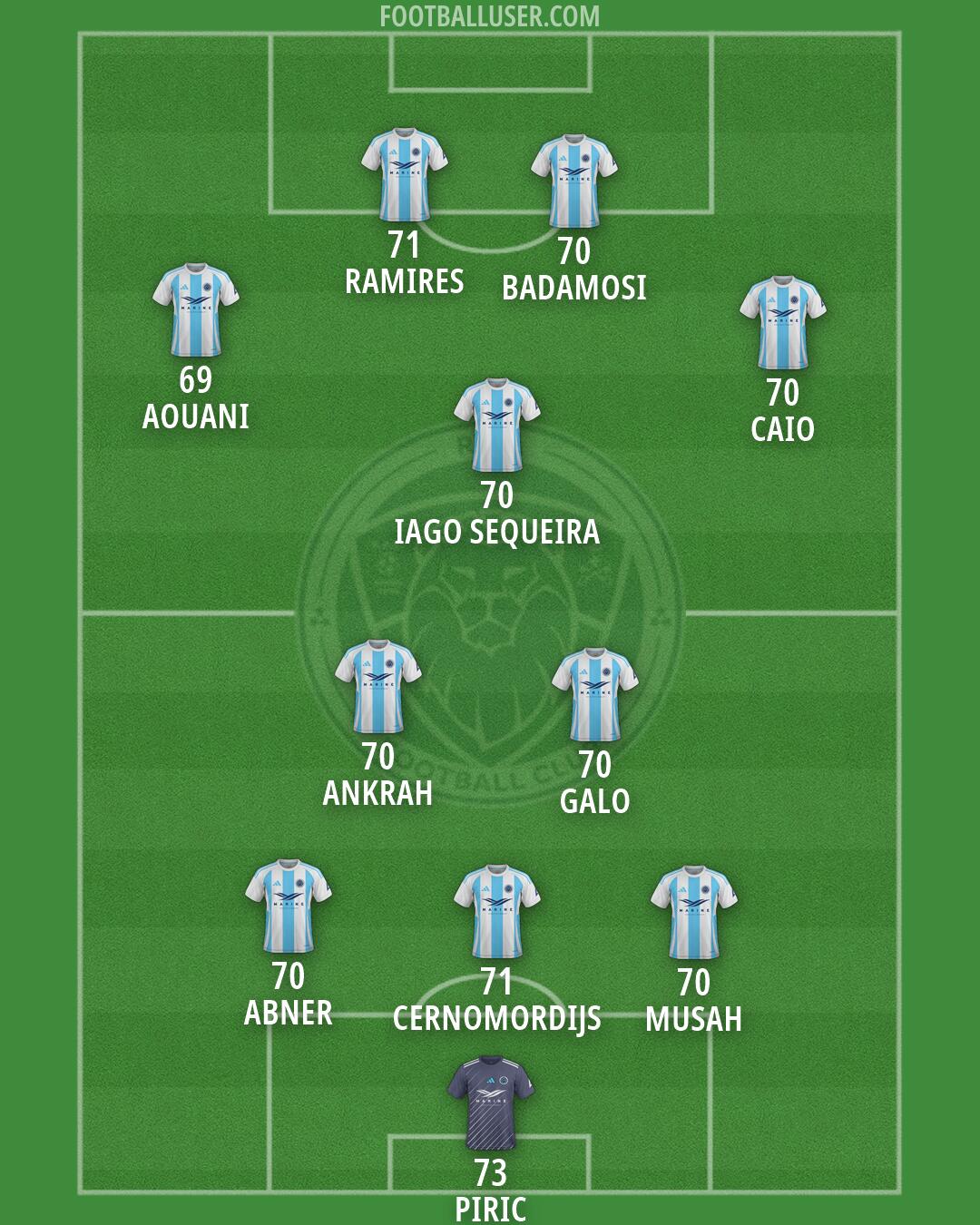

Riga Football Formation
 Today, November 3, 2026


Starting Lineup
73 (PIRIC)71 (CERNOMORDIJS)
70 (ABNER)
70 (MUSAH)
70 (GALO)
70 (ANKRAH)
70 (IAGO SEQUEIRA)
69 (AOUANI)
70 (CAIO)
71 (RAMIRES)
70 (BADAMOSI)
Riga focuses on a heavy defensive block and quick transitions using a 5-3-2. This formation is built to stay compact and deny space in the middle, waiting for the right moment to hit the opposition in behind. The team seeks to defend in a low block and rely on the pace of the front two to score on the break.
Between the posts, 73 acts as the last line of defense. The defensive unit uses a back five that can shift into a narrow defensive block to protect the central areas. 71 and 70 sit as the central defenders to win the second ball and cover any runs. On the flanks, 70 and 70 operate as attacking wing backs, tasked to push high to provide width and track back to help the defense. This lineup ensures that the team is always difficult to break down through the center.
In the middle of the pitch, a three-man midfield provides the engine for Riga. The DM acts as a single pivot to shield the defense and intercept passes. To the sides, the RCM and LCM work to connect the defensive and attacking lines. They are responsible to press aggressively to win the ball high when needed and recycle possession to the wing backs. This midfield group aims to compress the midfield and prevent the opponent from playing through the lines.
The attacking front line consists of two forwards working in close partnership. 71 and 70 act as a two-man strike force, with the LS often looking to find the feet of the striker and hold up the ball. The RS works to make runs in behind to exploit the space left by an advancing opponent. They press from the front to force a long ball and create opportunities through quick combinations. The wing backs help by providing cutbacks from the byline to support these two forwards.
Riga gains a significant advantage through their compactness when defending. The narrow shape makes it hard for opponents to find passing lanes through the middle. Additionally, the team can create wide overloads from overlapping full backs when they transition from a low block to an attack. This allows the two strikers to stay central while the width comes from the flanks.
This 5-3-2 formation is designed to be defensively solid and lethal on the counter. It is best suited for games against teams that dominate possession and leave space behind their high defensive line.