
Pohang Football Formation
 November 4, 2026


Starting Lineup
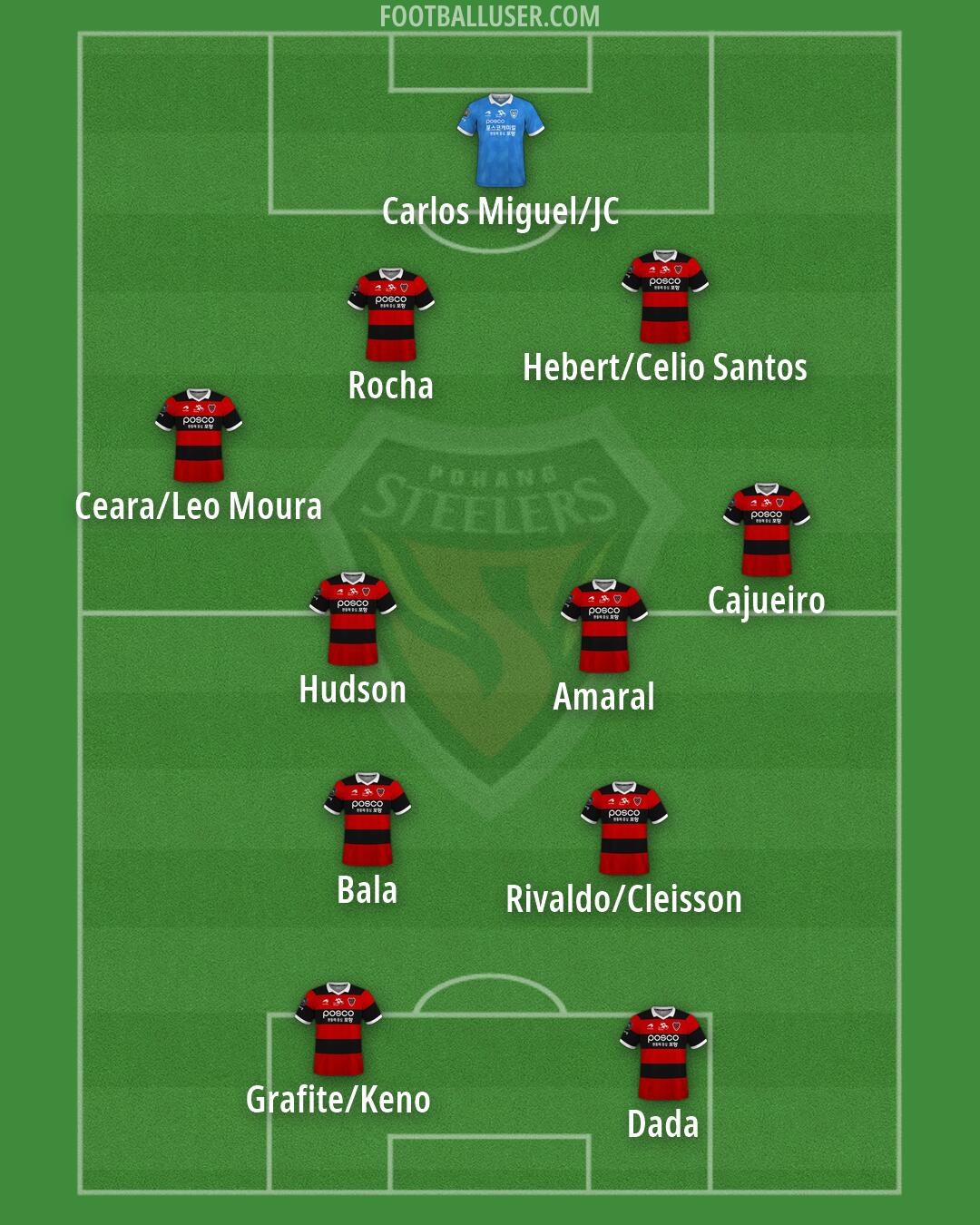
Rocha · Hebert/Celio Santos · Carlos Miguel/JC · Ceara/Leo Moura · Cajueiro · Hudson · Amaral · Bala · Rivaldo/Cleisson · Grafite/Keno · DadaPohang relies on a high octane, vertical style of play using a 2-4-4 formation. This lineup is built to overwhelm the opposition through heavy numbers in the final third and rapid transitions. The team seeks to win the ball back high up the pitch and strike before the opponent can settle into a defensive block.
Carlos Miguel/JC stands between the posts to provide security for the small defensive unit. The back line consists of a two man central defensive pairing with Hebert/Celio Santos and Rocha. Because there are only two players in the central defense, they must play a high line and stay compact to avoid being caught by long balls. Hebert/Celio Santos and Rocha need to be ready to step up and intercept passes or engage attackers immediately to prevent them from turning. They cover the space behind the midfield to ensure the team is not exposed during transitions.
The midfield is a four man engine room designed to control the center and protect the two defenders. Ceara/Leo Moura operates as a single pivot to shield the defense and recycle possession. Beside him, Amaral acts as a central link to connect the back line to the attack. Cajueiro and Hudson occupy the half spaces, acting as driving midfielders who can carry the ball forward or press aggressively to win the ball back in the middle third. This midfield group must work hard to squeeze the space and deny the turn of any opposing playmakers.
Pohang deploys a heavy front line of four attackers to stretch the defense. Dada plays on the left wing while Grafite/Keno operates on the right wing, both looking to cut inside or cross into the box. In the center, Bala and Rivaldo/Cleisson work as a duo of center forwards. They often play in combinations to pin the last defender and create runs in behind. This attacking group can press from the front in a coordinated way to force a long ball from the opposition.
A major advantage of this formation is the sheer volume of players available in the attacking third. The team creates wide overloads and can quickly switch play to find space. By pushing so many players forward, Pohang can achieve numerical superiority in almost every area of the pitch once they enter the final third. This allows for rapid combinations and creates many chances to hit the opposition in behind on the transition.
This formation is designed for a high risk, high reward style of football. It is best suited for matches where Pohang can dominate the ball or catch an opponent out of position through speed.