Custom Team Football Formation
 November 6, 2026


Starting Lineup
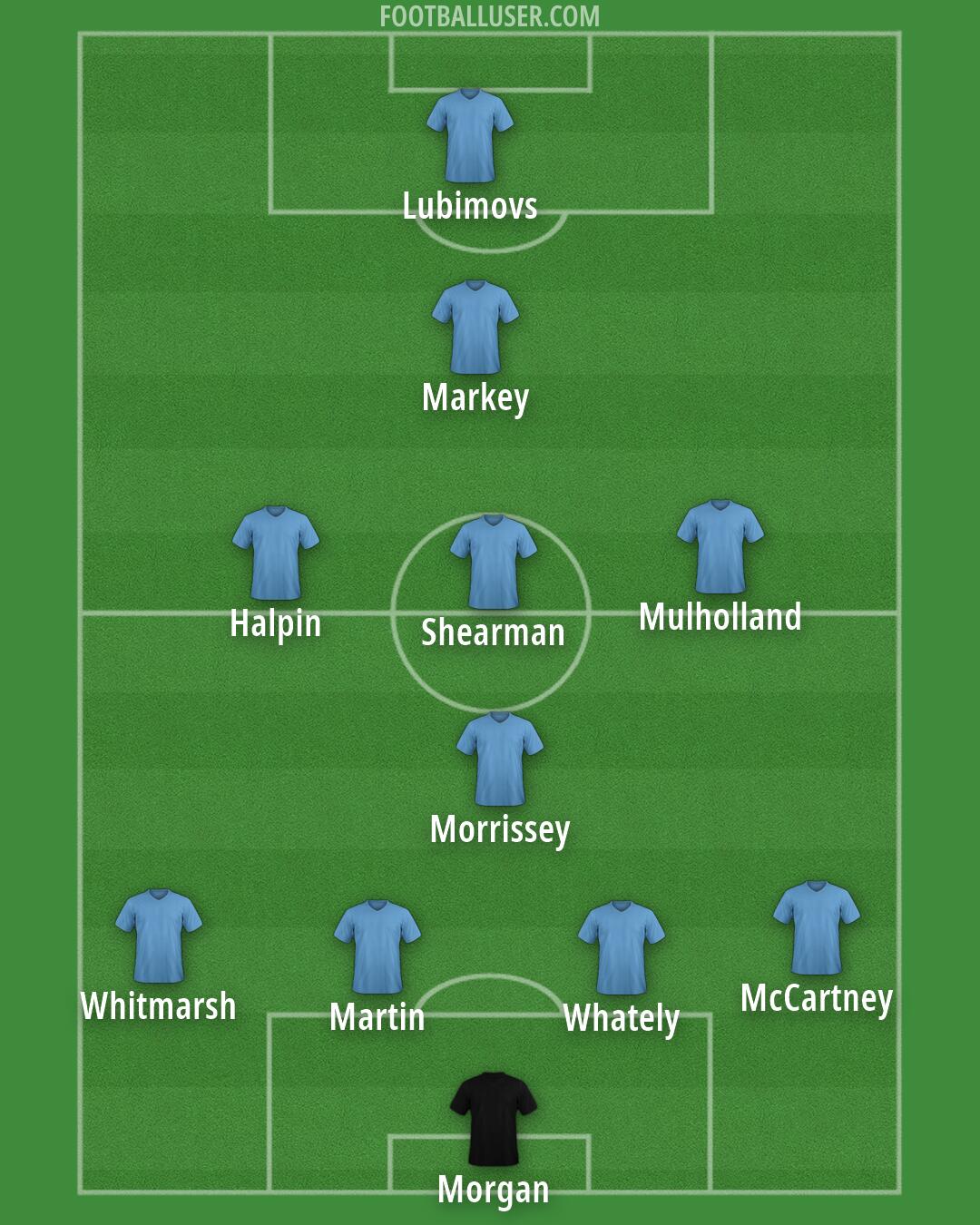
Morgan · Martin · Whately · Whitmarsh · Shearman · Mulholland · Morrissey · Markey · Lubimovs · Halpin · McCartneyA heavy emphasis on defensive solidity and quick transitions defines this team as they operate within a 5-4-1 formation. This lineup is built to sit deep and absorb pressure before hitting opponents on the break. The goal is to deny space in the central areas and force the opposition into wide positions where they can be contained.
Morgan guards the goal while the defensive unit holds a narrow defensive block. Morrissey acts as the central anchor of the back five, providing presence in the middle. To his sides, Martin and Whately operate as the central defenders to defend zonally and cover the space behind the wing backs. McCartney acts as an attacking wing back on the right to provide width, while Whitmarsh plays as the left wing back to stretch the opposition. This back five unit aims to stay compact and squeeze the space between the lines.
The midfield functions as a four man line designed to protect the center and win the second ball. Shearman and Mulholland work in the central areas to shield the defense and recycle possession. Halpin plays as the left central midfielder to help connect the defense to the attack, while Markey operates as an attacking ten behind the striker. Markey looks to find pockets of space and play through the lines to spark moves. This midfield group works to press in a mid-block and deny the turn to opposition playmakers.
In the attacking phase, the team relies on a lone striker, Lubimovs, to lead the line. Lubimovs acts as a pressing centre-forward to disrupt the opposition back line and hold up the ball to allow the midfield to move up the pitch. The attacking plan involves looking for runs in behind or using the width provided by McCartney and Whitmarsh to deliver crosses. When the team wins the ball, they look to break quickly and find Lubimovs to initiate combinations.
One major advantage for this lineup is the compactness when defending, which makes it very difficult for opponents to play through the middle. The team can also use the width of the wing backs to create wide overloads once they transition into the attacking third. The ability to pack the central zones ensures that the defensive unit remains difficult to break down.
This 5-4-1 formation is built to frustrate opponents through a disciplined low block. It is best suited for matches against high possession teams where the goal is to defend deep and strike on the transition.