Chelsea Football Formation
 November 10, 2026


Starting Lineup
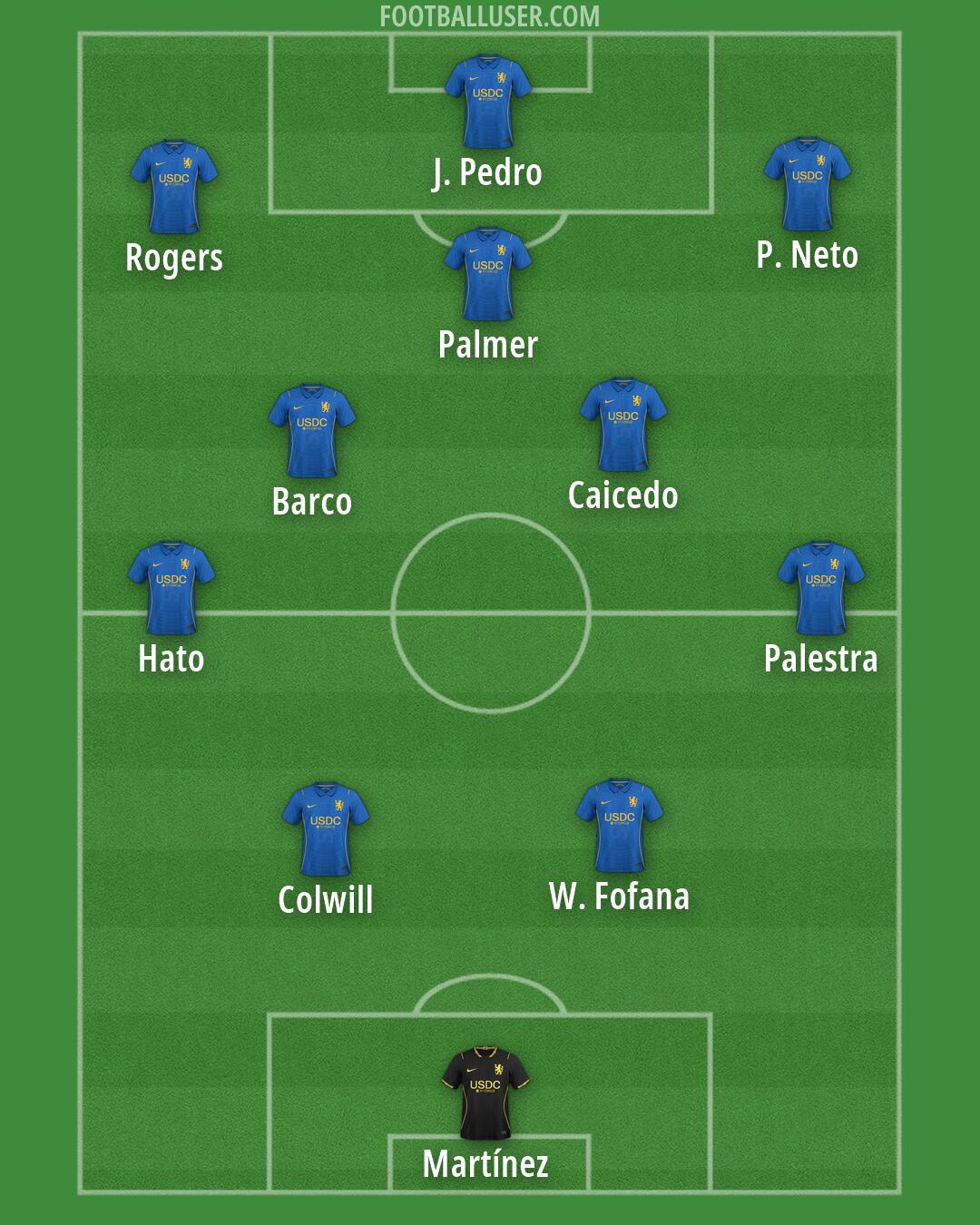
J. Pedro · Rogers · Palmer · P. Neto · Barco · Caicedo · Hato · Palestra · Colwill · W. Fofana · MartínezChelsea aims to dominate the ball and control the tempo through a high press, utilizing a 2-5-3 formation. This lineup is built to pin the opponent back and create constant pressure in the final third. By pushing so many players forward, the team seeks to win it back high up the pitch and strike quickly before the opposition can settle.
Martínez operates between the posts to act as a sweeper behind a high line. The defensive unit relies on a two man back line where Colwill serves as a ball playing defender to start attacks. W. Fofana provides the necessary cover, often stepping into midfield to intercept passes or handle physical duels. This setup requires both central defenders to stay alert to prevent being hit in behind on the transition.
The midfield is the engine of Chelsea, working in a five man block to control the center of the pitch. Hato sits in a deep role to shield the defense, while Palestra provides a partner to protect the zone in front of the two center backs. Barco and Caicedo work in the half spaces to link the defensive and attacking lines, with Caicedo often carrying the ball forward to drive the team up the pitch. Palmer plays as an attacking ten behind the striker, looking to find pockets of space and play through the lines to the forwards.
In the attacking third, the team uses three attackers to stretch the defense. Rogers and P. Neto operate as wide wingers who look to cut inside or spread wide to provide width. J. Pedro leads the line as a pressing centre forward, working to harass the opposition back line and hold up the ball for others. The combination of Palmer and the front three allows for quick link up play between the lines and constant runs in behind.
One major advantage of this formation is the ability to create wide overloads by having the midfield and wingers work in close proximity. The heavy presence in the center allows the team to compress the midfield and win the second ball frequently. Chelsea can also use the movement of Barco and Caicedo to create numerical superiority in central areas, making it hard for opponents to mark everyone.
This formation is built for total dominance and aggressive ball recovery. It is best suited for matches where Chelsea faces a low block and needs to break down a stubborn defense through constant pressure.