Chelsea Football Formation
 November 10, 2026


Starting Lineup
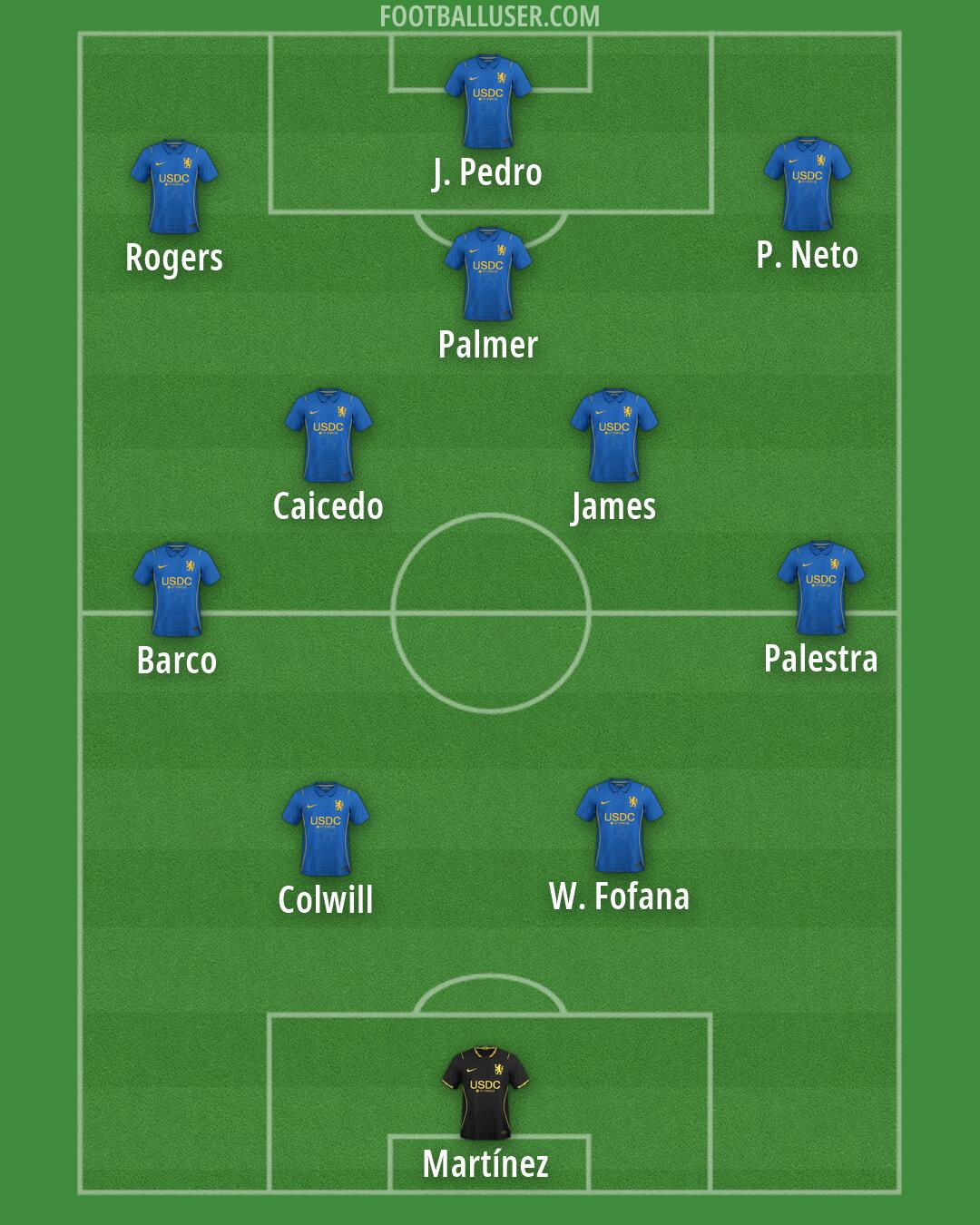
J. Pedro · Rogers · Palmer · P. Neto · Barco · Caicedo · James · Palestra · Colwill · W. Fofana · MartínezChelsea favors a high press and rapid attacking transitions using a 2-5-3 formation. This lineup focuses on dominating the middle of the pitch and using wide players to stretch the opposition. By crowding the central areas, Chelsea looks to win the ball high up the pitch and move it quickly toward the forward line.
Martínez stays between the posts to manage the defensive line. Colwill and W. Fofana operate as a two man central defense that must stay very alert to any runs in behind. Because there are only two defenders in the back line, Colwill and W. Fofana often have to step up to intercept passes or cover the wide areas when the midfield pushes high. This defensive unit relies on quick recovery runs and high concentration to prevent being caught by long balls.
The midfield is a dense block designed to control the tempo. Barco and Palestra act as a double pivot to shield the two defenders and provide a base for the team. Caicedo works in the left half space to press aggressively and win the ball, while James operates in the right channel to carry the ball forward. Palmer plays as an attacking ten behind the striker, looking to find pockets of space between the lines and play through the lines with his passing. This five man midfield creates a heavy presence in the center to win the second ball.
In the attacking phase, Chelsea uses three players across the front. J. Pedro acts as a lone striker to hold up the ball and pin the last defender. Rogers plays as a wide winger on the left to provide width, while P. Neto operates on the right as an inverted winger who wants to cut inside. These attackers press the opposition back line to force mistakes. The movement is designed to create runs in behind and allow Palmer to arrive late into the box to score.
One major advantage of this formation is the numerical superiority in midfield, which allows Chelsea to dominate possession and recycle possession easily. The high density of players in the middle makes it difficult for opponents to play through the center. Additionally, the way James and Barco occupy the wide channels can create wide overloads that force the opposition to shift and leave gaps for Palmer or the wingers to exploit.
This formation relies on extreme aggression and high intensity to win the ball in advanced positions. It is a high risk lineup that works best against teams that struggle to bypass a heavy press.