QPR Football Formation
 Today, November 11, 2026


Starting Lineup
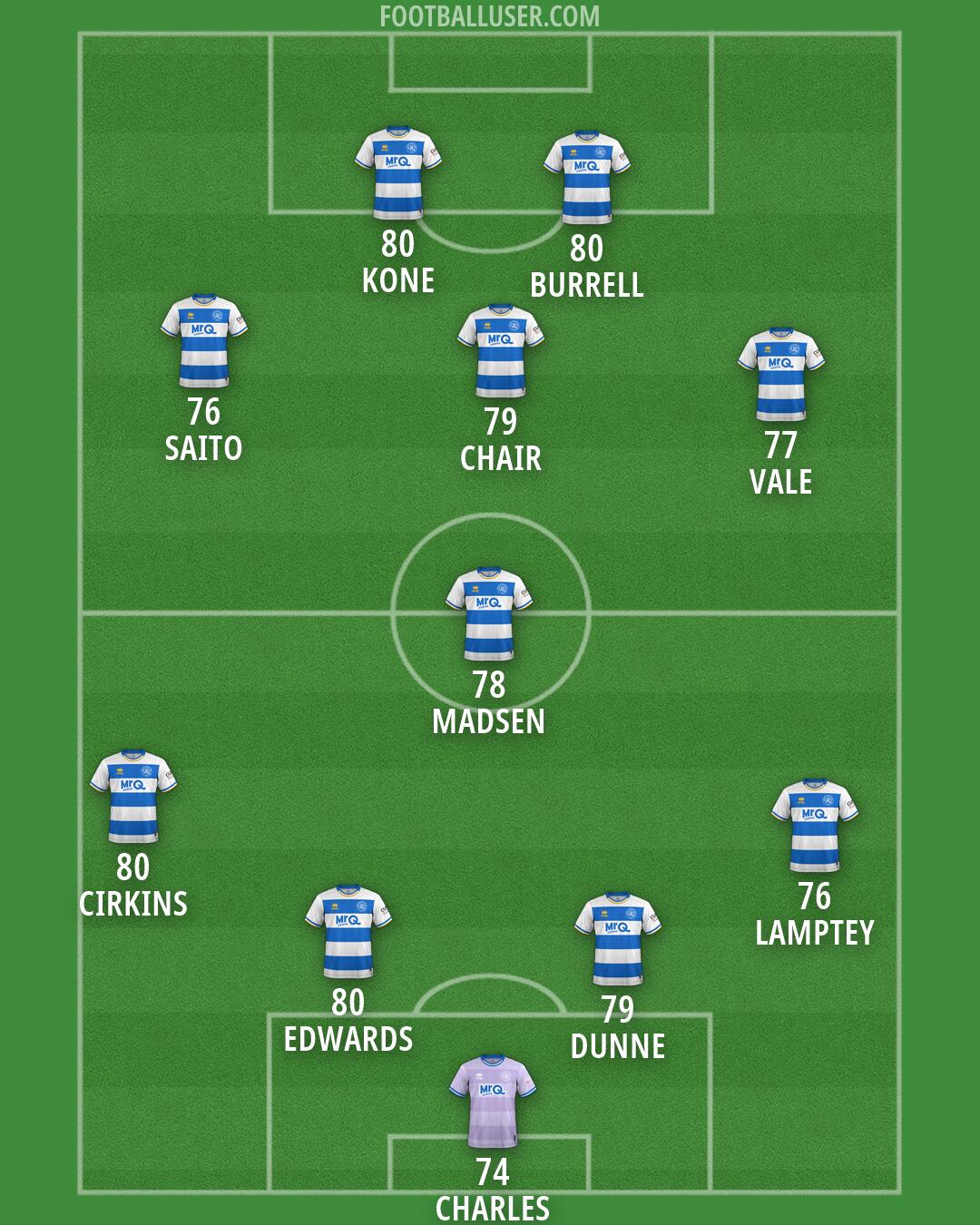
74 (CHARLES)80 (EDWARDS)
79 (DUNNE)
80 (CIRKINS)
76 (LAMPTEY)
78 (MADSEN)
76 (SAITO)
77 (VALE)
79 (CHAIR)
80 (KONE)
80 (BURRELL)
QPR focuses on being defensively solid and hitting teams on the break using a 5-3-2. This formation aims to create a compact block that is hard to penetrate while relying on quick vertical movements to exploit gaps in the opposition. The lineup is built to sit deep and wait for the right moment to strike.
In goal, 74 acts as the last line of defense. The back five consists of a central trio featuring 78, 80, and 79, creating a narrow defensive block. The wide centre-back 80 and the other central defender 78 provide cover and strength in the air. On the flanks, 76 and 80 operate as attacking wing backs, tasked with providing width when needed and tracking back to defend the wide areas. This defensive unit works together to maintain a compact shape and deny the turn to oncoming attackers.
The midfield works as a three-man midfield with a carrier to bridge the gap between lines. 79 sits in the center to shield the defense and recycle possession, while 77 and 76 operate on the left and right sides. The role of 77 is to carry the ball forward and link the play, whereas 76 works to press in a mid-block and win the second ball. This trio helps QPR control the central space and move the ball from the back three toward the front line.
Up front, the team uses two forwards in a partnership to stretch the opposition. 80 and 80 operate as a strike duo, often looking to run in behind or hold up the ball to allow others to join the attack. They press the opposition back line to force a long ball and create chaos. The wide wingers do not exist in this lineup, so the attacking width comes from the overlapping runs of the wing backs. This creates combinations through the middle and allows the strikers to find the feet of the midfielders.
One major advantage for QPR is the ability to defend in a very tight low block, making it difficult for opponents to find space between the lines. The formation also allows for wide overloads when 76 and 80 push high, turning the back five into a more aggressive attacking unit. This flexibility helps the team shift between a defensive stance and a rapid counter at pace.
QPR relies on a heavy defensive foundation and quick transitions to disrupt more dominant sides. This formation is best suited for games where the opponent holds a lot of possession and can be caught out on the break.