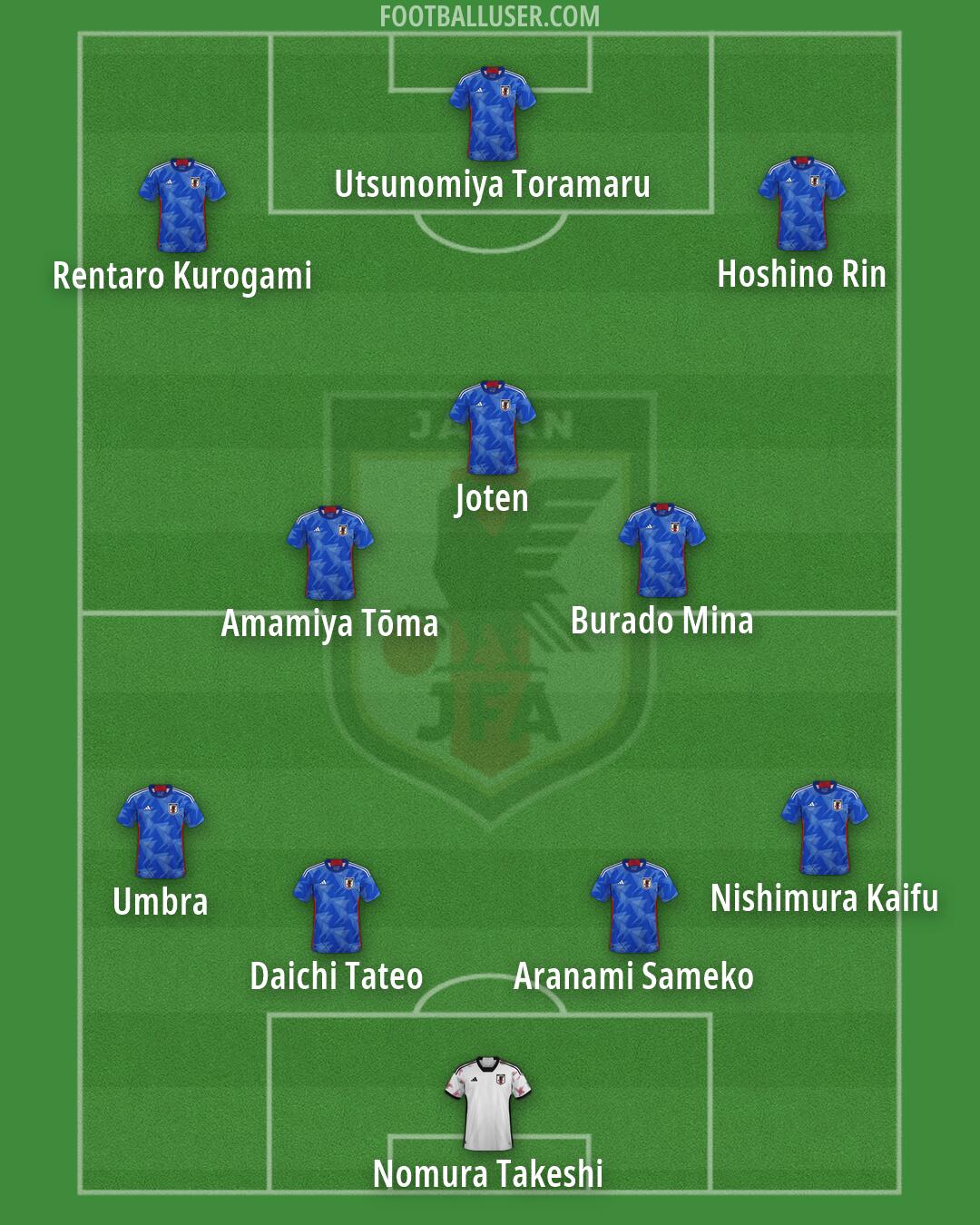

Japan National Football Team Formation
 Today, November 13, 2026


Starting Lineup
Utsunomiya Toramaru · Hoshino Rin · Rentaro Kurogami · Daichi Tateo · Aranami Sameko · Nishimura Kaifu · Amamiya Tōma · Burado Mina · Umbra · Joten · Nomura TakeshiJapan focuses on a high press and verticality through a 4-3-3 formation. This lineup is built to win the ball high up the pitch and quickly hit the opposition. The intent is to keep the play moving forward and use the width of the pitch to stretch the opponent.
Nomura Takeshi starts between the posts to organize the back line. Japan utilizes a flat back four that can step up to set the offside trap. Daichi Tateo and Aranami Sameko act as central defenders, where Daichi Tateo covers space while Aranami Sameko engages the striker. Umbra plays as an attacking full back to provide width, whereas Nishimura Kaifu holds a more defensive role to secure the flank. The unit functions by staying compact and squeezing the space between the lines.
The midfield operates as a three-man midfield with a carrier. Amamiya Tōma sits in the left channel to connect the defense and attack, while Burado Mina works to win the second ball and drive forward with the ball. Joten plays as an attacking ten behind the striker to find space between the lines. This group works to press aggressively to win the ball back high up the pitch and transitions quickly from defense to attack.
Up front, the team uses three attackers across the front to pin the last defender. Utsunomiya Toramaru acts as a pressing centre-forward to lead the line and hold up the ball. Rentaro Kurogami plays as an inverted winger who cuts inside to create goalscoring chances, while Hoshino Rin stays wide to stretch the defense and deliver crosses. The forwards press the opposition back line in pairs to force a long ball.
One major advantage for Japan is the ability to press high in coordinated waves, putting immense pressure on the opposition build up. Another strength is the wide overloads created when Umbra overlaps the winger to create a two on two situation. This setup also allows for quick transitions to catch the opponent out of position.
This 4-3-3 formation relies on intense pressing and rapid vertical movement. It is best suited for matches against teams that struggle to play out from the back under pressure.