Leeds Football Formation
 Today, November 16, 2026


Starting Lineup
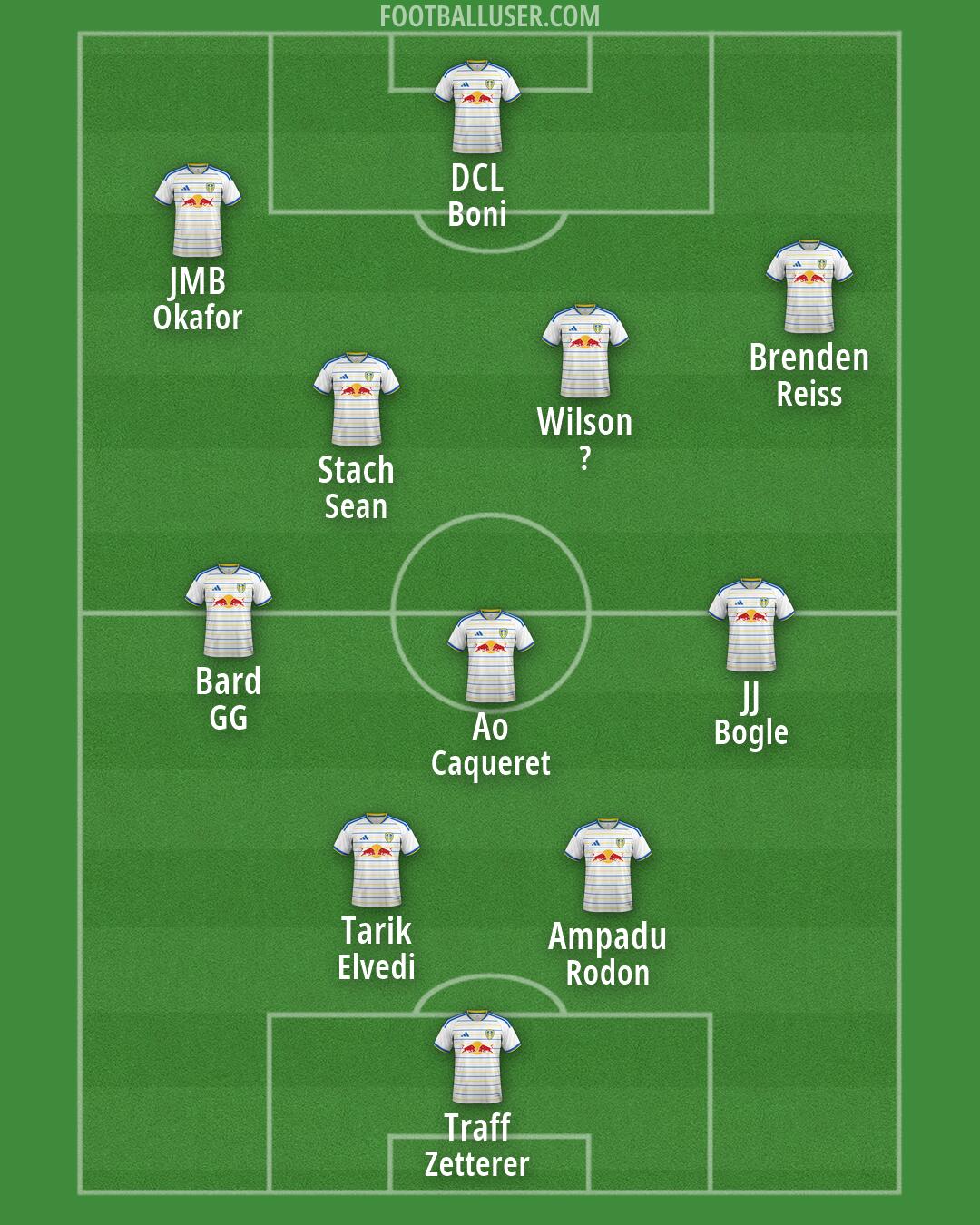
DCL (Boni) · Traff (Zetterer) · JJ (Bogle) · Ampadu (Rodon) · Tarik (Elvedi) · Ao (Caqueret) · Bard (GG) · JMB (Okafor) · Brenden (Reiss) · Stach (Sean) · Wilson (?)Leeds focuses on a high press and heavy verticality using a 4-3-3. The team aims to win the ball high up the pitch and push forward quickly to catch the opposition out of position. This lineup is built to sustain pressure in the final third and use quick transitions to score.
DCL operates between the posts to manage the defensive line. Behind him, the flat back four consists of JMB on the right and Brenden on the left. JMB acts as an attacking full back to provide width, while Brenden stays more disciplined to cover the flank. In the center, Wilson and Stach form the heart of the defense. Wilson acts as a ball playing defender to start attacks, while Stach stays deep to cover space and win the second ball.
The midfield functions as a three-man midfield with a carrier. Ao sits in the center to shield the defense and recycle possession. To his left, Bard works to connect the lines and drive forward with the ball. JJ plays in the half-spaces to arrive late into the box and press aggressively to win the ball back. This unit works together to compress the midfield and prevent the opposition from playing through the lines.
Up front, the attack uses three attackers across the front. Tarik stays wide on the right to stretch the defense, while Ampadu plays as an inverted winger on the left to cut inside and create chances. Traff operates as a pressing centre-forward to pin the last defender and hold up the ball for others. The front three work to trigger a press from the front, forcing the opposition to play long balls that the defensive unit can intercept.
Leeds offers several tactical advantages through this formation. The team can create wide overloads from the overlapping runs of JMB and the movement of Tarik. There is also a strong ability to press high in coordinated waves, with the front three and midfield squeezing the space. This creates constant pressure and forces mistakes in the opponent's defensive third.
This 4-3-3 formation is designed for teams that want to dominate through aggressive pressing and quick verticality. It is best suited for matches against opponents who struggle to play out from the back under pressure.