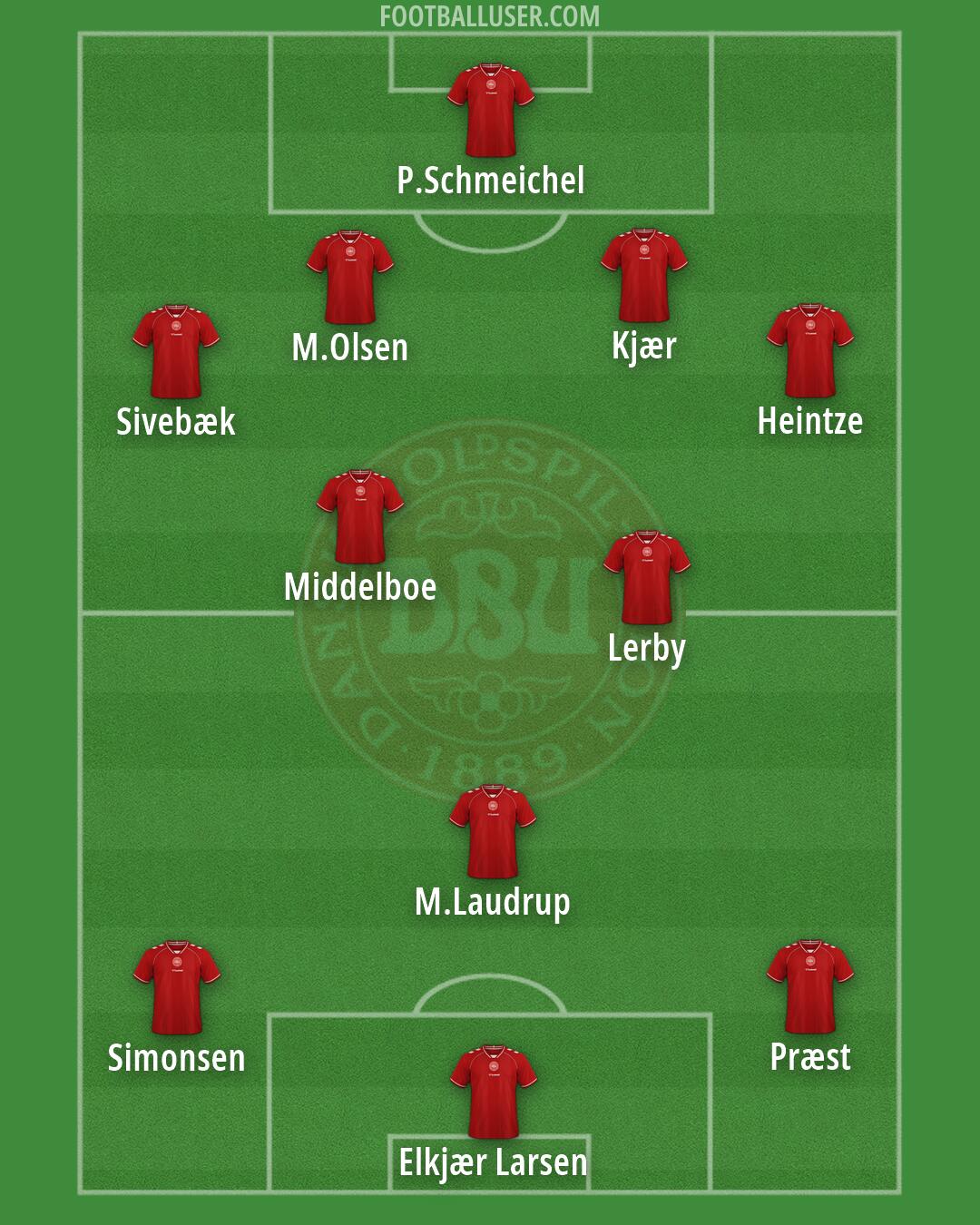

Denmark National Football Team Formation
 Today, November 19, 2026


Starting Lineup
P.Schmeichel · M.Olsen · Kjær · Sivebæk · Heintze · Middelboe · Lerby · M.Laudrup · Elkjær Larsen · Præst · SimonsenDenmark focuses on a vertical style of play that looks to hit the opponent in transition, operating from a 4-3-3 formation. This lineup seeks to create direct chances and use quick ball movement to stretch the opposition. The team relies on high energy to win the ball and immediately look for runs in behind the defense.
In goal, P.Schmeichel acts as the last line of defense, using his presence to organize the unit. The defensive line stays relatively compact, with Heintze and Sivebæk acting as full backs who provide width when the team has the ball. Kjær and M.Olsen form the central pairing, where Kjær uses his aerial strength and leadership to command the area. They defend zonally to cover space and ensure they do not get caught out by long balls.
The midfield functions as a three-man midfield with a carrier and a creative presence. Middelboe and Lerby work to protect the center and win the second ball, allowing the team to regain possession quickly. M.Laudrup plays as an attacking ten behind the striker, finding pockets of space between the lines to create chances. This group connects the defense to the attack, with Middelboe often dropping deeper to help build play from the back.
Denmark uses three attackers across the front to pin the opposition back. Elkjær Larsen acts as a pressing centre-forward, making runs to stretch the defense and hold up the ball. Præst and Simonsen occupy the wide areas as wingers, with Simonsen often looking to cut inside to create a numerical advantage in the middle. The attackers work together to press from the front, forcing the opposition into mistakes and creating opportunities for quick combinations.
One major advantage for Denmark is the ability to press high in coordinated waves, putting immediate pressure on the opponent's build up. The formation also provides speed of transition, allowing the team to move from a defensive block to an attacking threat in seconds. By using the width of Heintze and Sivebæk, the team creates wide overloads that pull defenders out of position.
This 4-3-3 formation relies on quick transitions and direct attacking movements. It is best suited for matches against teams that play a high defensive line and leave space behind their defenders.