Derby Football Formation
 November 20, 2026


Starting Lineup
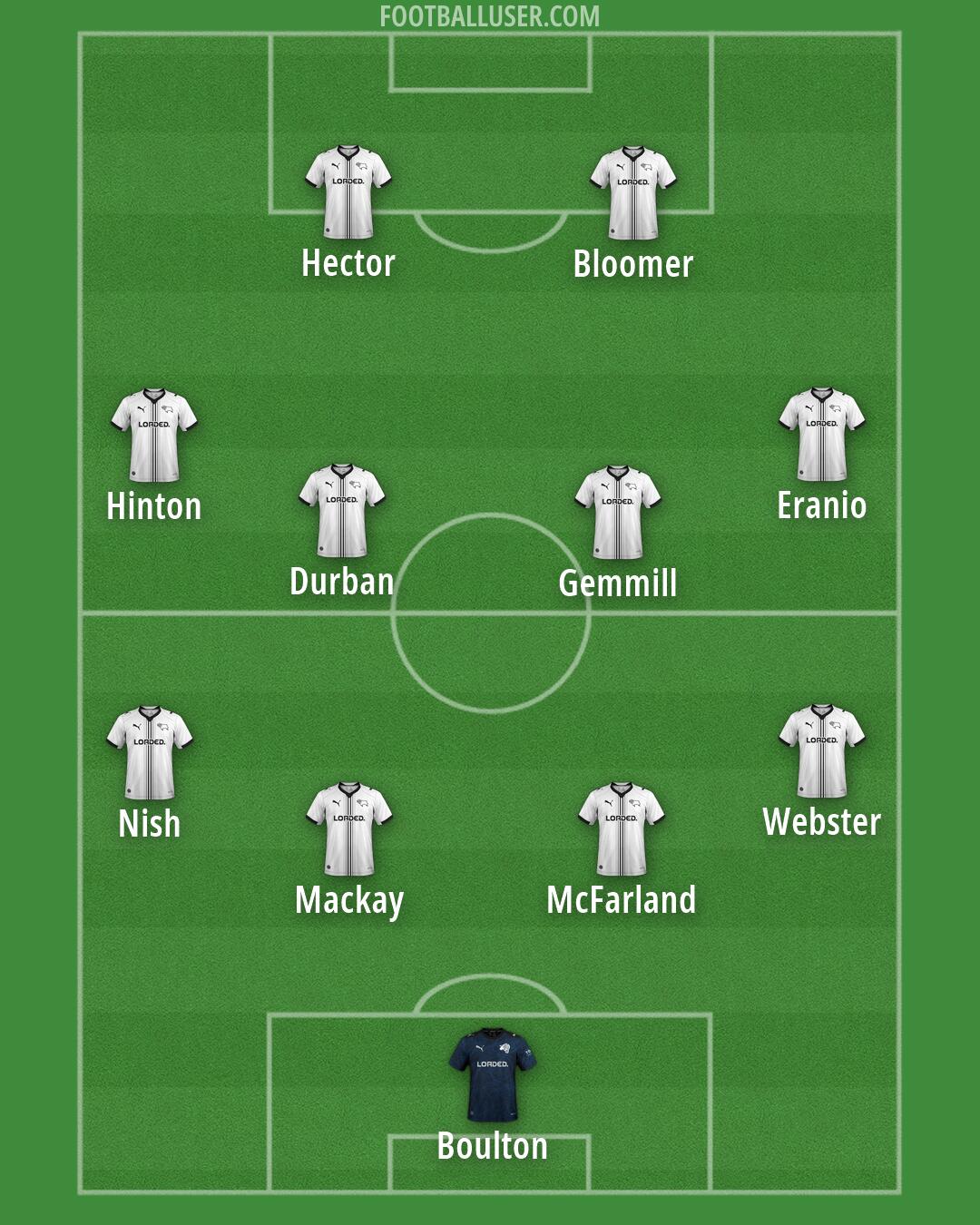
Boulton · Webster · McFarland · Mackay · Nish · Eranio · Gemmill · Durban · Hinton · Bloomer · HectorDerby aims to play a direct and vertical style of football using a 4-4-2 formation. This lineup relies on winning second balls and using the width of the pitch to stretch the opposition. The goal is to transition from a compact defensive block into quick attacking movements that catch the opponent out of position.
Boulton stays between the posts to organize the defensive unit. The back four functions as a flat back four to maintain compactness. Webster acts as the right back to cover the wide area, while Nish operates as the left back to provide support. In the center, McFarland and Mackay work as the central defensive pairing, tasked with winning headers and clearing the lines when under pressure. They must hold the line to keep the distance between the defense and midfield small.
The midfield works in two lines of four to control the central areas. Gemmill and Durban form a central pairing, where one works to shield the defense while the other looks to carry the ball forward. Eranio operates on the right wing to provide service, while Hinton plays on the left. These players must press in a mid-block to force a long ball from the opponent. This midfield unit connects the defense to the front line by recycling possession and playing through the lines.
Derby uses two forwards in a partnership to lead the attack. Hector and Bloomer work together to pressure the opposition back line and pin the last defender. They look to combine in tight spaces or hit in behind on the transition if space opens up. The wide players, Hinton and Eranio, look to get to the byline and whip it in for the strikers. This setup creates constant threats through runs in behind and the ability to find the feet of the striker.
One major strength of this Derby lineup is the ability to maintain compactness when defending in a mid-block. By keeping the two lines of four close together, they squeeze the space in the middle of the pitch. Another advantage is the potential for wide overloads when the full backs, Webster and Nish, push up to overlap the wingers. This creates numerical superiority in the final third to help deliver crosses.
This 4-4-2 formation provides a solid platform for direct attacking football and quick transitions. It is best suited for matches against teams that leave space behind their defense or struggle to manage wide areas.