Chelsea Football Formation
 November 27, 2026


Starting Lineup
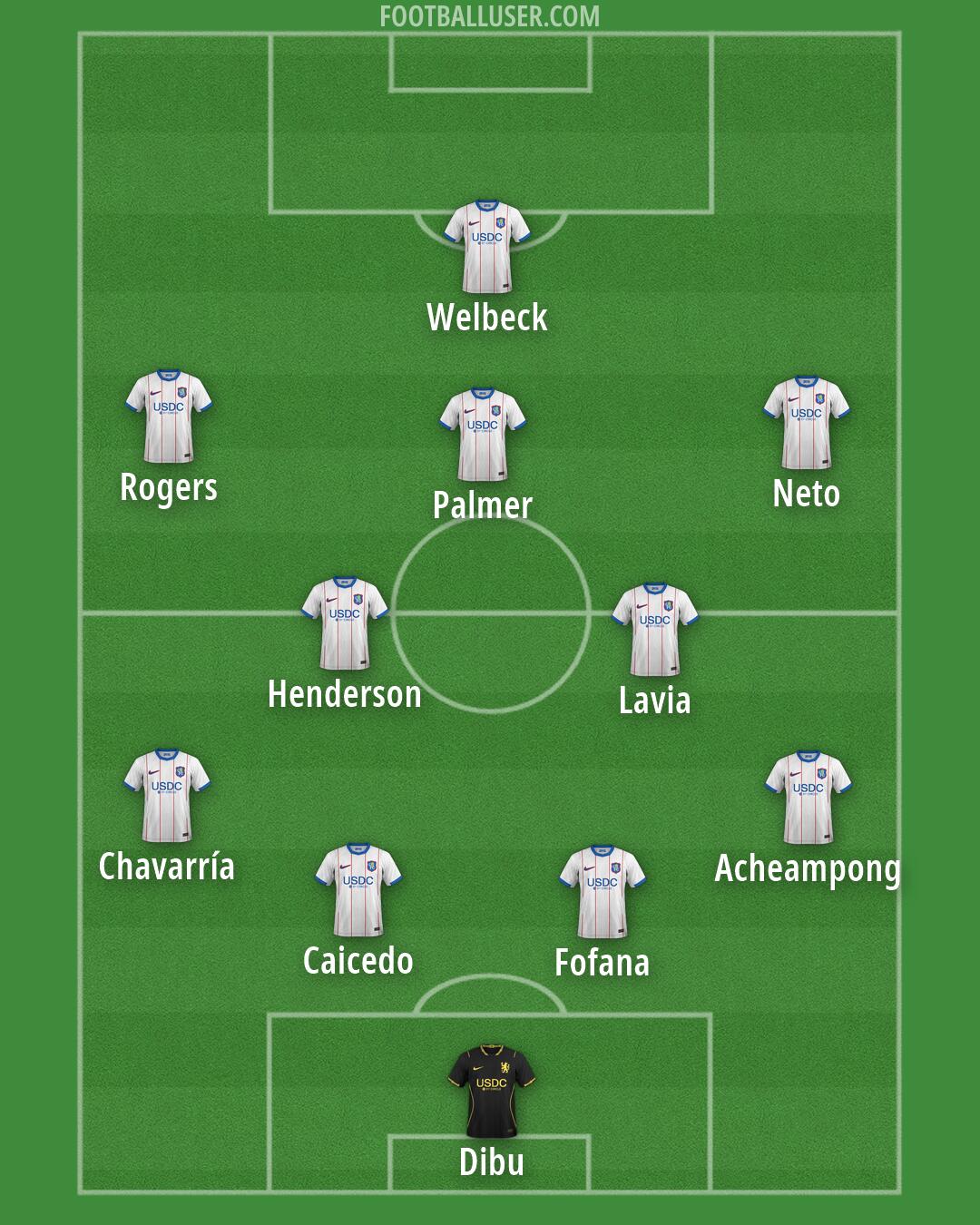
Caicedo · Palmer · Lavia · Henderson · Acheampong · Fofana · Dibu · Neto · Rogers · Chavarría · WelbeckChelsea focuses on a high press and verticality using a 4-2-4. This formation is built to pin the opposition back and win it back high up the pitch through aggressive numbers in the final third. The goal is to bypass the midfield quickly to catch the defense before they can settle.
Dibu plays between the posts to oversee the defensive line. Chelsea uses a flat back four where Acheampong acts as the right back and Chavarría operates as the left back. Fofana and Caicedo form the central pairing, with Fofana acting as a ball playing defender to start attacks. The defensive unit tries to hold a high line to squeeze the space, while the full backs must be ready to track back quickly if the ball is lost.
The midfield relies on a double pivot to control the central zone. Lavia works to shield the defence and recycle possession, while Henderson acts as the carrier to move the ball from deep areas. Lavia is tasked to deny the pivot of the opposition, while Henderson looks to progress through the thirds. This pair must maintain balance to prevent the team from being caught out during transitions.
The attack is built around four players designed to stretch the defence. Palmer and Welbeck operate as two forwards in a partnership, with Palmer often dropping into the hole to link up play. On the flanks, Neto and Rogers act as wide wingers who hug the touchline to create width. Neto looks to cut inside to find the feet of the striker, while Rogers provides width to allow for overlaps from the full backs. The front four press from the front to force a long ball from the opponent.
A major advantage of this Chelsea lineup is the ability to press high in coordinated waves. By committing four players to the front, the team can pin the last defender and create constant pressure. Another strength is the potential for wide overloads when Acheampong and Chavarría push up to support the wingers. This creates high pressure and allows for quick combinations in the final third.
This formation is a high risk, high reward system that prioritizes attacking intent and pressing. It is best suited for matches where Chelsea needs to break down a low block or overwhelm an opponent through sheer offensive volume.