
Barcelona Football Formation
 January 10, 2025


Starting Lineup
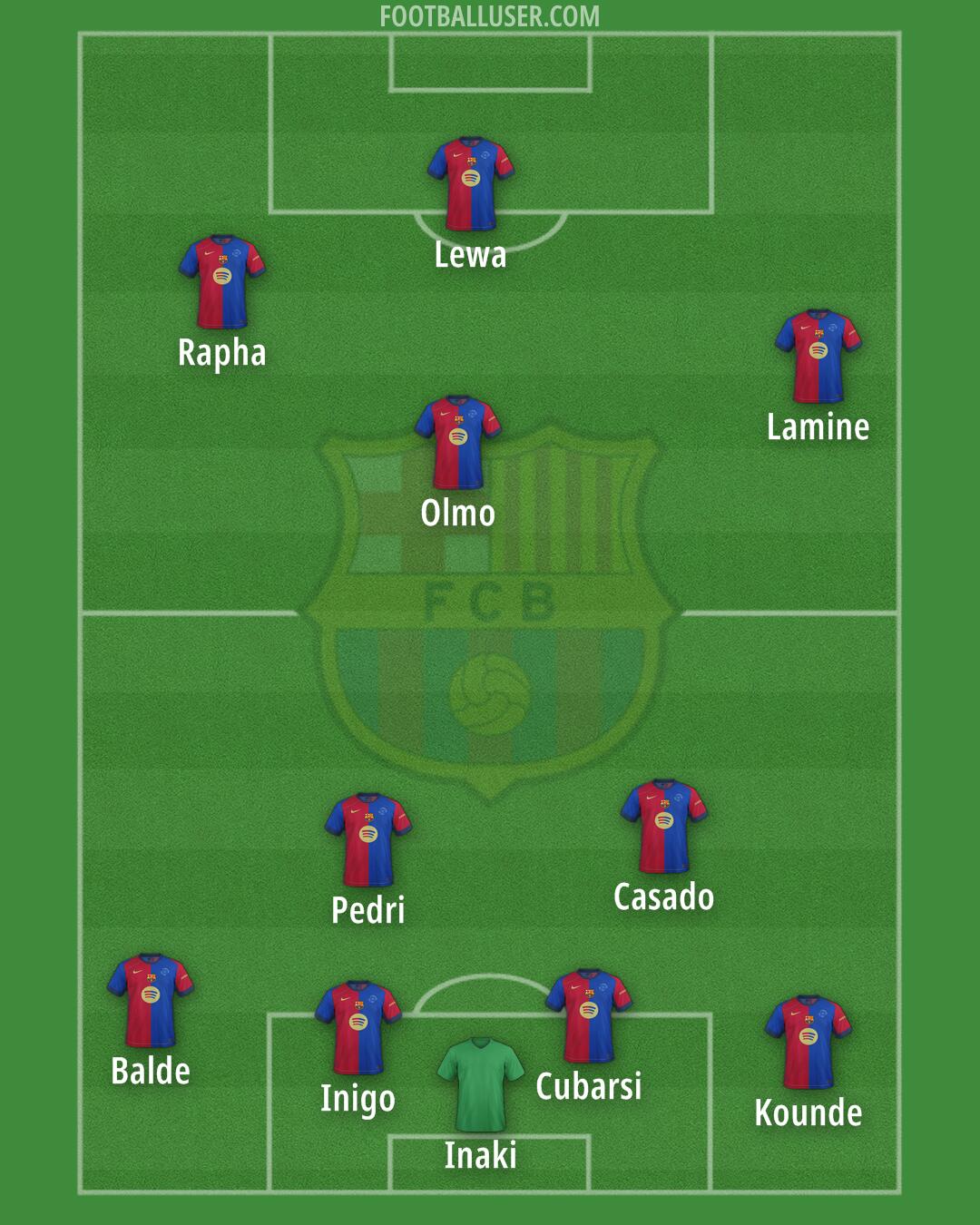
Inaki · Balde · Inigo · Cubarsi · Kounde · Casado · Pedri · Olmo · Rapha · Lewa · LamineFocusing on heavy possession and high pressing, Barcelona utilizes a 4-3-3 formation to control matches. This lineup aims to dominate the ball through short passing and high positioning to keep the opposition pinned in their own half. The goal is to use ball retention to move the opponent around the pitch until gaps open up in the defensive lines.
Inaki plays between the posts to start the build up play from the back. The defensive unit operates with a flat back four that can push up to a high line to squeeze the space. Kounde acts as a defender who can hold the line while Balde provides width as an attacking full back. In the center, Cubarsi works as a ball playing defender who can play out from the back, while Inigo provides aerial strength and covers the space behind. The back line works together to maintain a compact shape and set the offside trap.
The midfield works as a three man midfield with a carrier and creative talents. Casado plays a role to shield the defence and win the second ball, providing a stable base. Pedri operates as an inverted eight who can receive on the half turn and find the feet of the striker to progress through the thirds. Olmo plays as an attacking ten behind the striker to connect the lines and make late runs into the box. This group helps Barcelona recycle possession and move the ball from the defensive third into the final third.
The attack uses three attackers across the front to stretch the defence. Lewa acts as the target man who can hold up the ball and win the header to bring others into play. On the flanks, Lamine is an inverted winger who likes to cut inside to create goalscoring chances, while Rapha plays wide to provide width and whip it in toward the box. These forwards press from the front to force a long ball and win it back high up the pitch. The combination of central presence and wide movement creates many runs in behind.
This formation provides significant advantages such as numerical superiority in midfield when players move into half spaces. The wide overloads created by Balde and Rapha can force the opposition to shift constantly. Barcelona can also use the speed of transition once the midfield triggers a press to catch the opponent out of position.
This 4-3-3 formation relies on heavy ball retention and high pressing to dictate the tempo of the game. It is best suited for matches against teams that sit deep and require constant movement to break them down.