
Modena Football Formation
 August 17, 2025


Starting Lineup
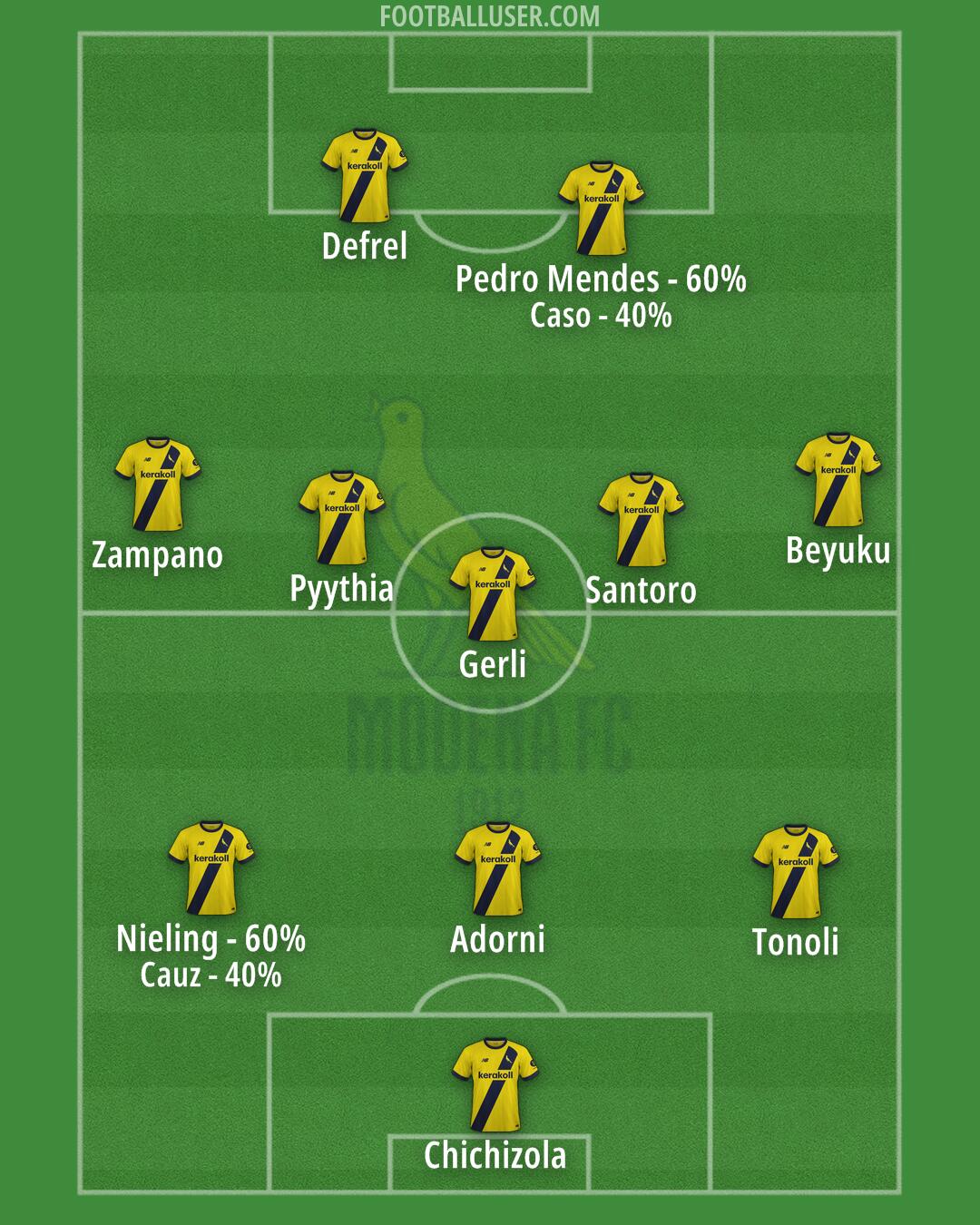
Chichizola · Tonoli · Adorni · Nieling - 60% (Cauz - 40%) · Santoro · Pyythia · Gerli · Beyuku · Zampano · Pedro Mendes - 60% (Caso - 40%) · DefrelModena looks to dominate through a high press and rapid transitions in this 3-5-2. This formation is built to control the middle of the pitch and use wide players to stretch the opposition. By controlling the central zones, the team aims to win the ball high up the pitch and immediately look to strike.
Chichizola plays between the posts to oversee the defensive unit. The back three features Adorni in the middle as a ball playing defender who can step up to intercept play. Tonoli acts as the right centre back to cover the wide areas, while Nieling sits on the left to provide cover. This back three functions to maintain a compact shape when defending a low block.
The midfield relies on a three man midfield with a carrier to dictate the tempo. Gerli sits as the single pivot to shield the defence and recycle possession. Santoro and Pyythia act as inverted eights who drive forward with the ball to support the attack. Zampano and Beyuku occupy the wide areas to provide width and help the wingers, ensuring the team can shift from a mid block to a wide offensive position.
In the final third, Modena uses two forwards in a partnership to pressure the opposition back line. Defrel leads the line as a pressing centre forward to force long balls from the defenders. Pedro Mendes plays as a second striker in the hole to link up with the midfield and make runs in behind. This duo uses combination play to find gaps, often looking for cutbacks from the byline when the wingers get deep.
This 3-5-2 offers significant advantages through numerical superiority in midfield. The presence of Zampano and Beyuku creates wide overloads from the flanks, which forces the opposition to stretch their defensive line. Additionally, the team is very effective at winning the second ball in the central corridor, allowing for quick transitions.
Modena uses this lineup to squeeze the space in the middle and punish teams on the break. This formation is best suited for games where the team needs to control the rhythm against a side that plays a narrow formation.