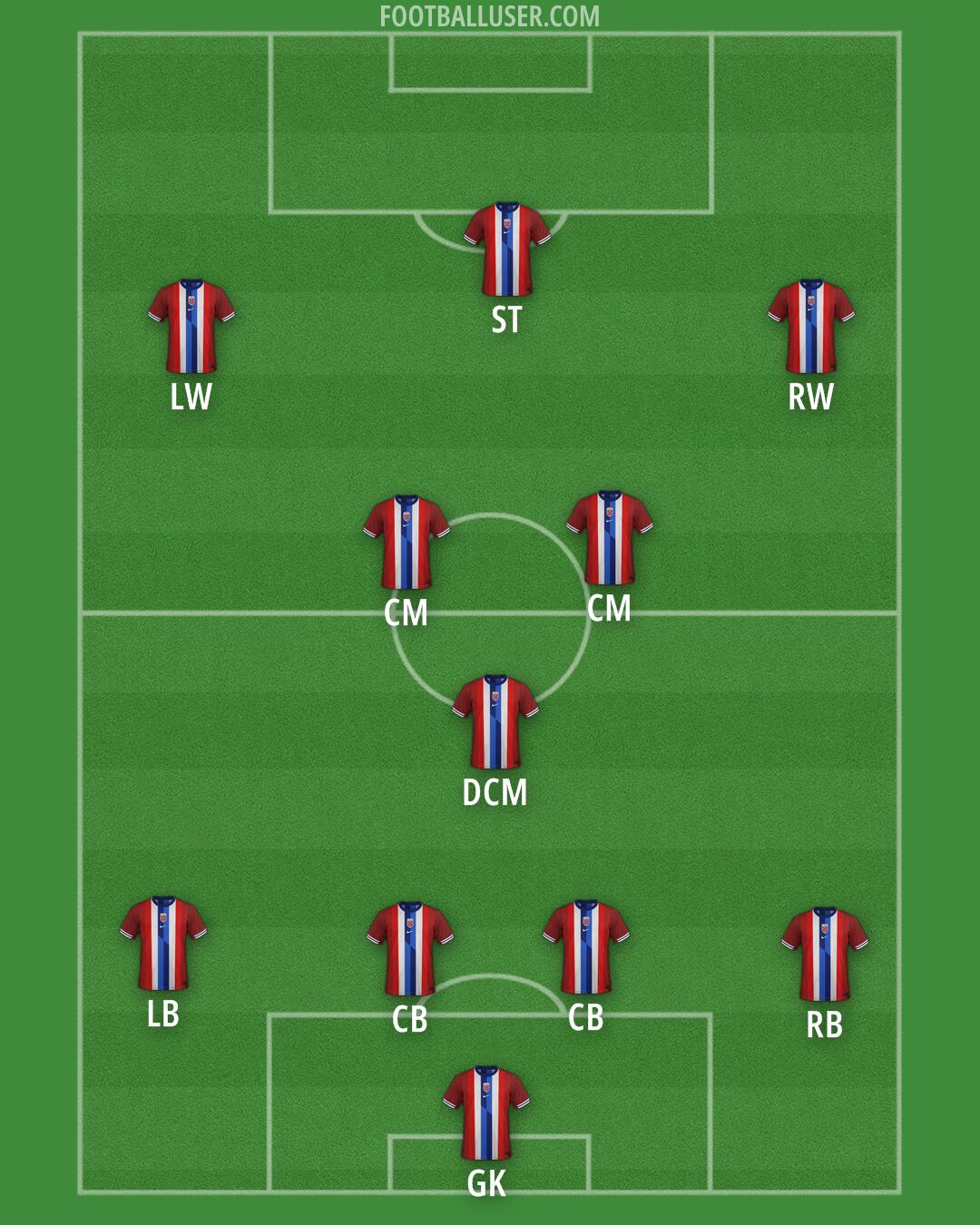

Norway National Football Team Formation
 February 28, 2026


Starting Lineup
GK · LB · RB · CB · CB · DCM · CM · CM · ST · LW · RWA high pressing, vertical style defines Norway and their 4-3-3 formation. This lineup seeks to win the ball high up the pitch and quickly transition into attacking phases. By spreading the players across the pitch, the team aims to create space for forward runs and quick passing combinations to break the opposition lines.
Protecting the goal is the GK, who acts as the first point of distribution for the defense. The back line consists of a flat back four featuring RB, LB, LCB, and RCB. The RCB and LCB must remain compact to block central runs, while the RB and LB are tasked to push up and provide width. These wide defenders often overlap to support the attack, leaving the central defenders to cover the space behind them.
In the center of the pitch, the midfield operates with a single pivot and two central midfielders. The DCM sits deep to shield the defense and intercept passes, acting as the link between the back four and the rest of the team. The LCM and RCM are responsible for driving the ball forward and connecting the midfield to the front three. They must work hard to track back and maintain the team's defensive block when possession is lost.
The attacking front line relies on three players to stretch the opposition defense. The ST leads the line, tasked to hold up the ball and run the channels to create space. On the flanks, the LW and RW act as wide attackers who look to cut inside or cross the ball into the box. These wingers press high when the team is out of possession, forcing the opposition into mistakes near their own goal.
Norway gains a massive advantage through the ability to create wide overloads when the RB or LB push high. This formation also allows the team to press in coordinated waves, making it very difficult for opponents to build play from the back. By maintaining compactness in the middle, the team can quickly shift the play to the wings to isolate players in one on one situations.
This 4-3-3 formation provides a balanced way to dominate possession while remaining dangerous on the counter. It is best suited for matches against teams that play a high line and struggle to deal with quick, vertical transitions.