
Norway National Football Team Formation
 March 19, 2026


Starting Lineup
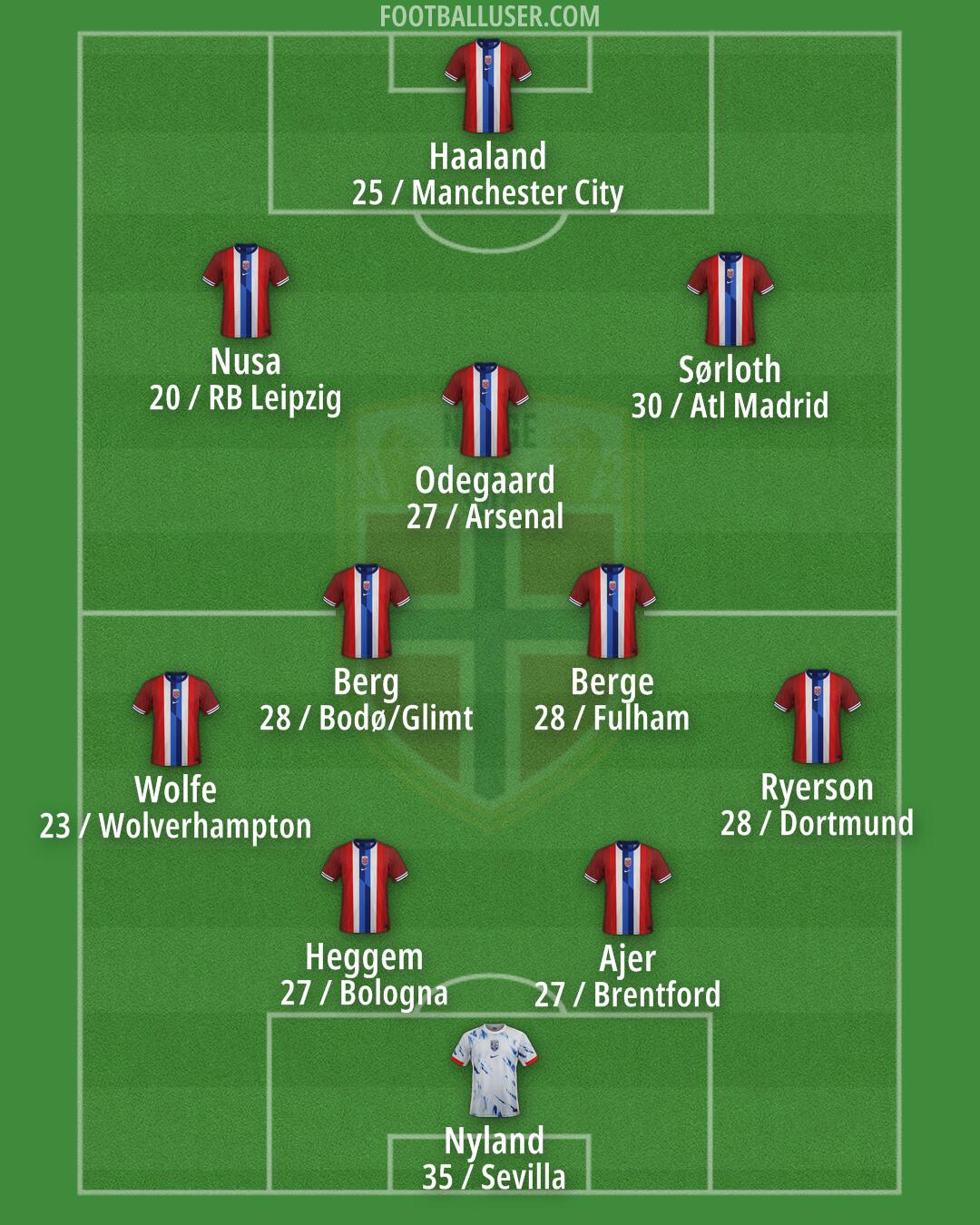
Nyland (35 / Sevilla) · Ryerson (28 / Dortmund) · Ajer (27 / Brentford) · Heggem (27 / Bologna) · Wolfe (23 / Wolverhampton) · Berge (28 / Fulham) · Berg (28 / Bodø/Glimt) · Odegaard (27 / Arsenal) · Sørloth (30 / Atl Madrid) · Nusa (20 / RB Leipzig) · Haaland (25 / Manchester City)A focus on high pressing and verticality defines the Norway lineup in this 2-5-3 formation. This team looks to win the ball high up the pitch and move toward the goal with speed. The tactical intent is to overwhelm opponents through heavy pressure and central overload, making it a very aggressive way to play.
Nyland stays between the posts to organize the back line. The defensive unit consists of a two man central defense with Ajer and Heggem acting as the primary shield. Both Ajer and Heggem must step up to intercept passes and handle long balls, often playing a high line to keep the distance between the defense and the midfield small. Because there are only two central defenders, they must be ready to cover large spaces when the team loses possession.
The midfield is crowded and designed to control the center of the park. Wolfe and Ryerson act as a double pivot to protect the two defenders and track runners from deep. In front of them, Berge and Berg occupy the central spaces to connect the play and push the team forward. Odegaard operates as the attacking ten, finding pockets of space to create chances and deliver through balls to the front line. This massive midfield block makes it difficult for opponents to play through the middle.
Norway utilizes three attackers to stretch the opposition. Haaland leads the line as the central striker, using his strength and movement to occupy defenders and hold up the ball. Nusa operates on the left wing to drive at defenders, while Sørloth plays on the right to provide width and goal threat. These three forwards press in unison to force mistakes, creating quick transitions for the midfield to exploit.
One major advantage of this formation is the numerical superiority in the center of the pitch. Having five players in the middle allows Norway to dominate possession and control the rhythm of the game. Another strength is the ability to press high in coordinated waves, which can trap opponents in their own half. The density in midfield also helps the team shift quickly to block passing lanes and intercept the ball.
This 2-5-3 formation relies on intense pressing and midfield control to dominate matches. It is best suited for games where the team needs to pin an opponent back and exploit gaps in a retreating defense.