
Norway National Football Team Formation
 July 12, 2026


Starting Lineup
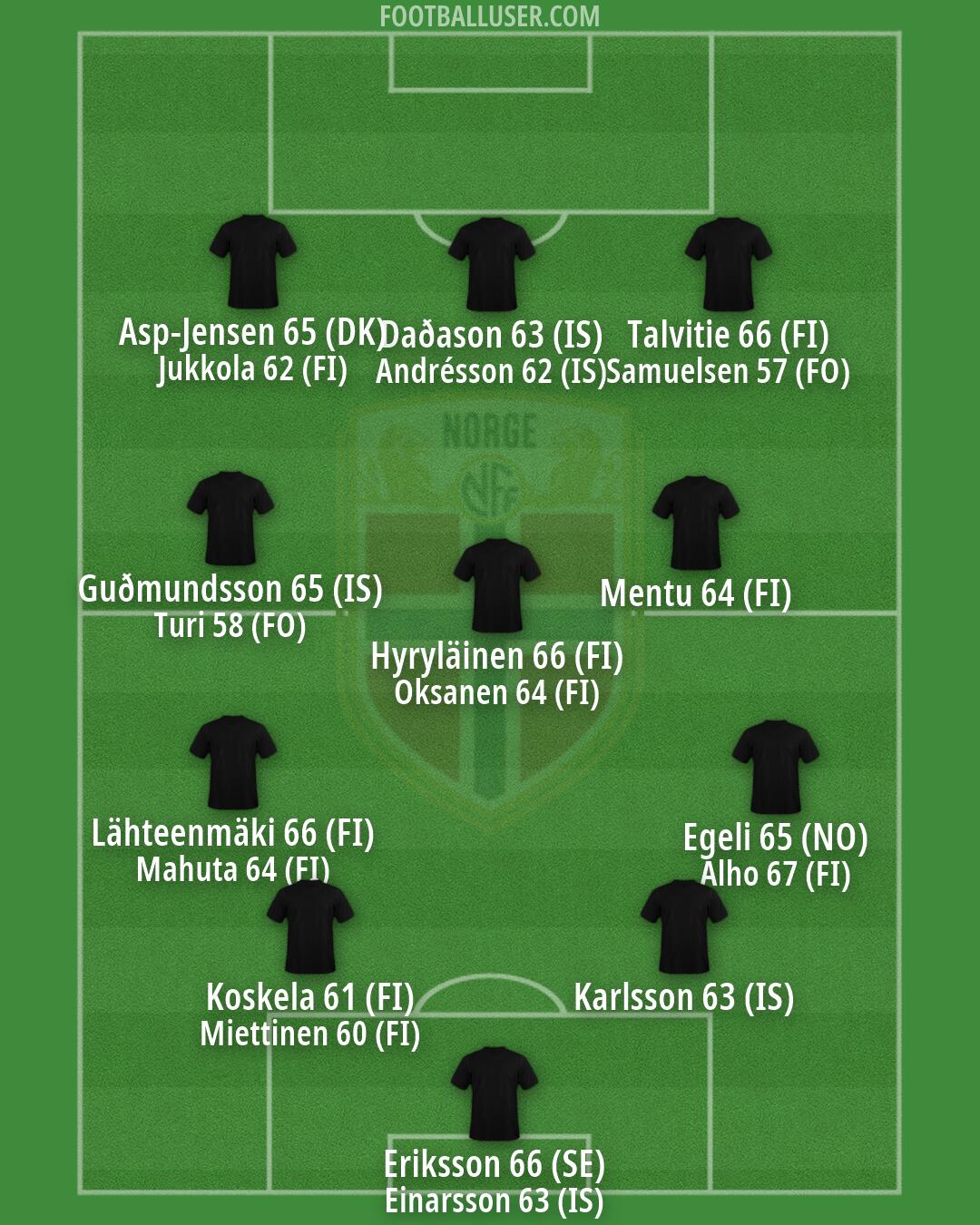
Daðason 63 🇮🇸 (Andrésson 62 🇮🇸) · Talvitie 66 🇫🇮 (Samuelsen 57 🇫🇴) · Mentu 64 🇫🇮 · Hyryläinen 66 🇫🇮 (Oksanen 64 🇫🇮) · Guðmundsson 65 🇮🇸 (Turi 58 🇫🇴) · Lähteenmäki 66 🇫🇮 (Mahuta 64 🇫🇮) · Egeli 65 🇳🇴 (Alho 67 🇫🇮) · Asp-Jensen 65 🇩🇰 (Jukkola 62 🇫🇮) · Koskela 61 🇫🇮 (Miettinen 60 🇫🇮) · Karlsson 63 🇮🇸 · Eriksson 66 🇸🇪 (Einarsson 63 🇮🇸)Norway aims to play a vertical style of football that relies on quick transitions and directness, utilizing a 4-3-3 formation. This lineup is built to stretch the opposition and create chances through rapid movement in the final third. By utilizing wide players and a strong central presence, the team looks to exploit gaps in the opponent's defensive lines.
Eriksson acts as the last line of defence in goal. In front of him, the back four consists of Egeli at right back and Lähteenmäki at left back. Both wide defenders are tasked to push up and provide width, while Koskela and Karlsson operate as the central defensive pair. Koskela and Karlsson must hold the line and remain compact to deny space between the lines. The defensive unit functions to maintain a steady line, ensuring the team stays hard to beat while preparing to move forward.
The midfield operates as a three-man midfield with a carrier role present to link the play. Guðmundsson sits in the left central midfield position to help control the tempo, while Mentu plays in the right central midfield role to drive the ball forward. Hyryläinen occupies the middle position to shield the defence and collect the ball from the defenders. This trio works to recycle possession and find the passing lanes to the attackers. They aim to win the second ball in the middle of the pitch to maintain pressure.
In the attacking phase, Norway uses three attackers across the front. Daðason acts as the lone striker, tasked to hold up the ball and find the feet of his teammates. On the wings, Talvitie plays as a right winger who looks to cut inside, while Asp-Jensen operates on the left wing to stretch the defence. The attack is built through combinations in the half-spaces and quick movement to find runs in behind. The forwards work to press from the front, forcing the opposition to play long.
One major tactical advantage for Norway is the ability to create wide overloads when Egeli and Lähteenmäki overlap the wingers. This movement forces the opposition to defend much wider areas. Another strength is the speed of transition when the midfield trio recovers the ball and immediately looks to find Daðason or the wide players. This allows the team to strike before the opposition can get behind their own defensive block.
This 4-3-3 formation is designed for a high energy game that relies on quickness and directness. It is best suited for matches against opponents who play a high line and leave space behind their defenders.