
Norway National Football Team Formation
 Today, September 24, 2026


Starting Lineup
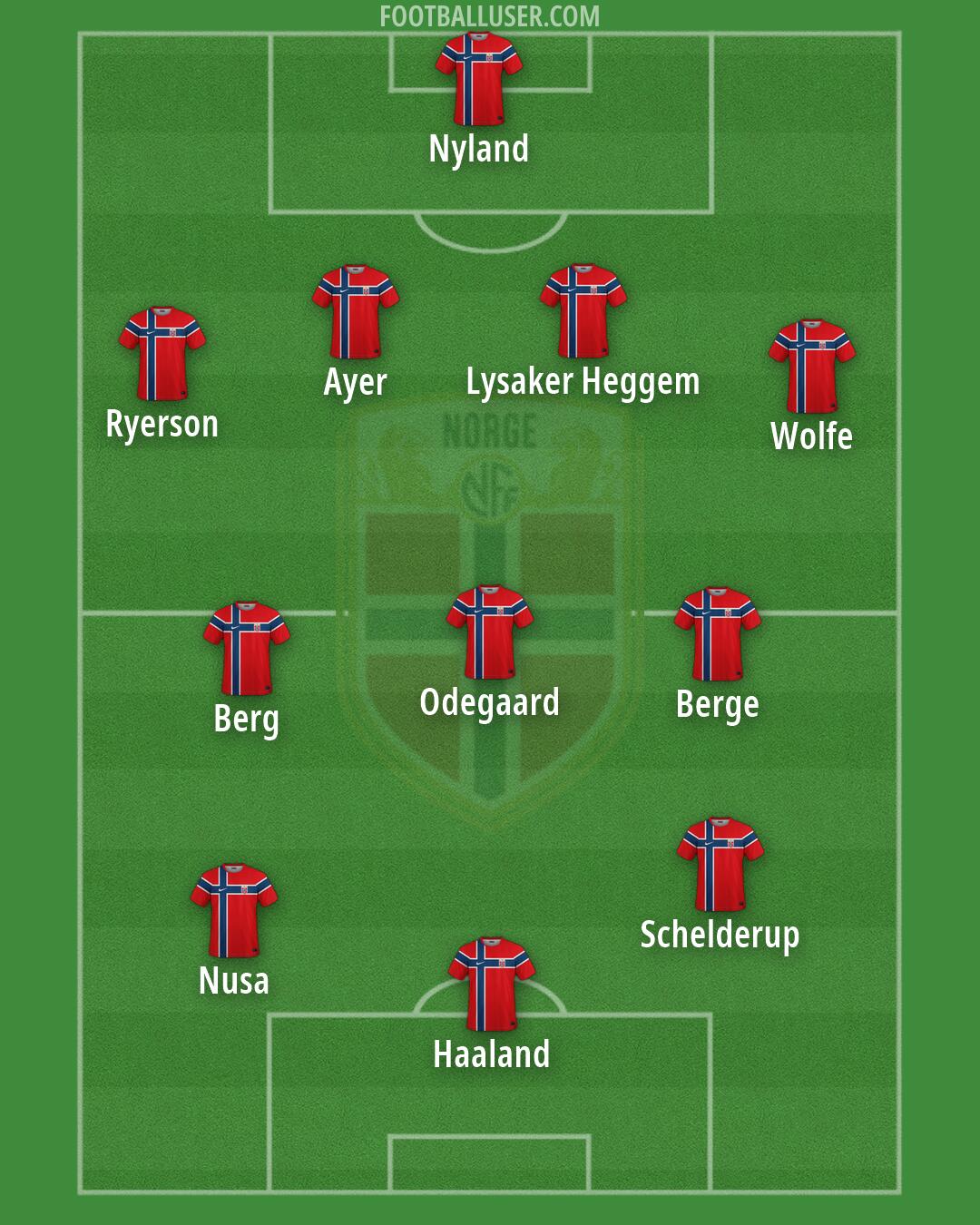
Haaland · Odegaard · Nusa · Schelderup · Berge · Berg · Nyland · Wolfe · Lysaker Heggem · Ayer · RyersonNorway seeks to control the tempo and use a high press through a 4-3-3 formation. This lineup is built to play a vertical style that looks to strike quickly once the ball is won. The team focuses on winning the ball high up the pitch to feed the front line as fast as possible.
Nyland acts as the last line of defense, playing a key role in starting attacks. A flat back four sits in front of him, with Ryerson and Wolfe acting as full backs who push high to provide width. In the center, Ayer and Lysaker Heggem form the defensive pairing, where Ayer provides strength while Lysaker Heggem covers the space behind. The unit aims to keep a high line to squeeze the space between the lines.
The midfield operates as a three-man midfield with a carrier and a creator. Odegaard operates in the half-spaces, using his exceptional passing range and vision to play through the lines. Berge provides the engine in the middle, working to win the second ball and carry the ball forward to link the defense to the attack. Berg helps to shield the defense and allows the other midfielders to push higher. This trio works to compress the midfield and prevent the opposition from playing out from the back.
Up front, Norway uses three attackers to stretch the defense. Haaland acts as the main striker, using his immense physical strength and finishing to pin the last defender. On the wings, Schelderup and Nusa act as wide wingers who look to isolate opponents in one on one situations. Schelderup and Nusa often cut inside to create central presence, while Haaland looks to make runs in behind to exploit gaps. The attack relies on quick combinations to break the line and deliver crosses into the box.
Norway gains a significant advantage through the ability to press high in coordinated waves. The front three and the midfield trio trigger a press together to force a long ball from the opponent. Another strength is the speed of transition, where the team can move from a defensive block to a direct attack in seconds. This allows the team to catch the opposition out of position before they can get behind.
This 4-3-3 formation is designed for a team that wants to dominate through high intensity and verticality. It is best suited for games against opponents who struggle to play under pressure and leave large spaces behind their midfield.