
Barcelona Football Formation
 November 13, 2026


Starting Lineup
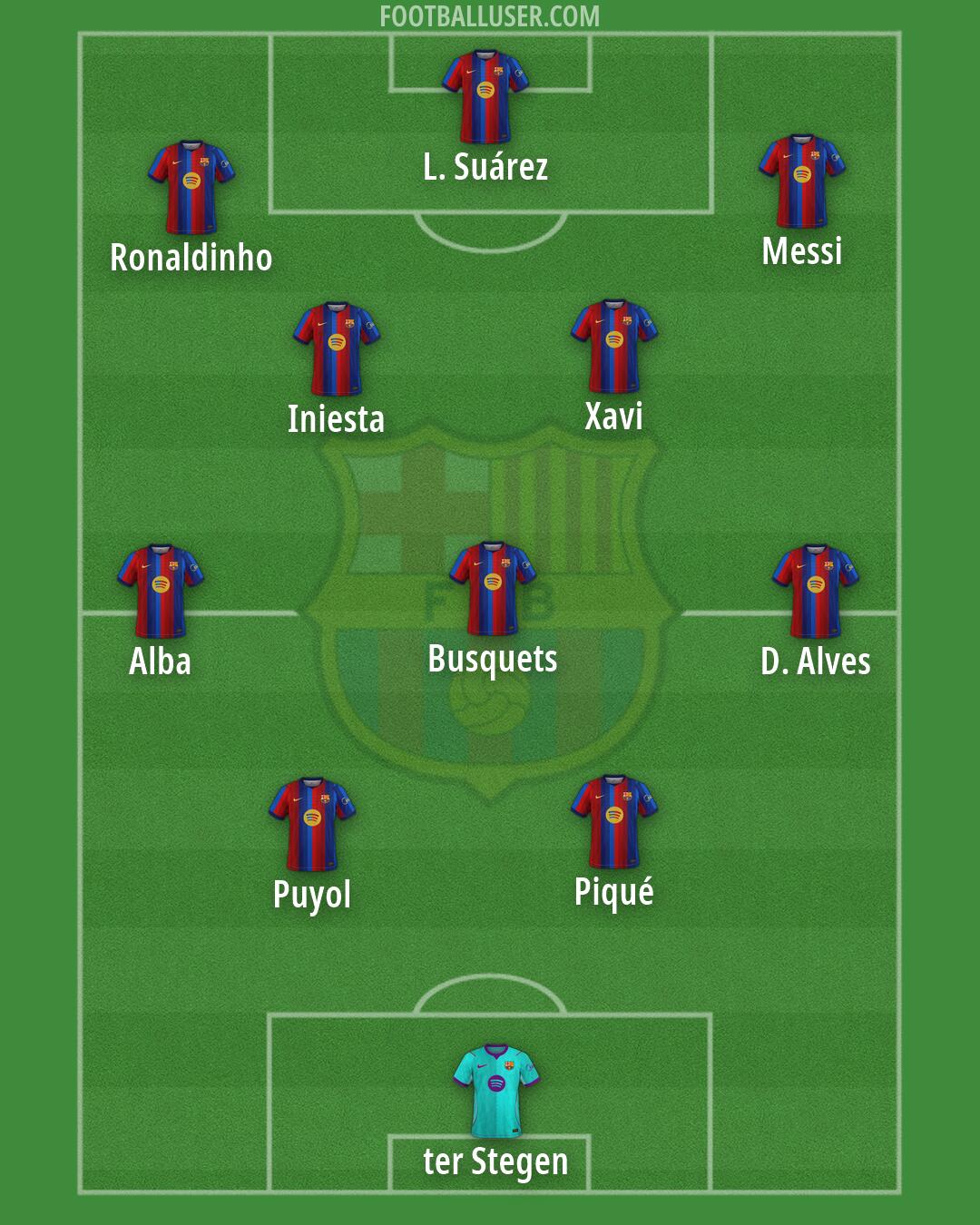
Busquets · L. Suárez · Ronaldinho · Messi · Iniesta · Xavi · Alba · D. Alves · Puyol · Piqué · ter StegenBarcelona aims to dominate the ball and control the tempo through short passing and high possession in a 5-2-3. This lineup is built to squeeze the pitch and use superior technical ability to break lines, creating constant passing triangles across every zone. The team wants to keep the ball close and use the ball to move the opposition until gaps appear in the defensive lines.
Ter Stegen starts from the back to play short from the back and initiate attacks. The defensive unit employs a back five that shifts based on the ball position. Busquets plays as the central man in a staggered back line, acting as a sweeping presence behind the high line. Piqué and Puyol operate as the central defenders, with Piqué acting as a ball playing defender to progress through the thirds while Puyol provides aggression and strength to win the second ball. Alba and D. Alves act as attacking wing backs, providing width and stretching the defence by pushing high up the pitch.
The midfield functions as a two man unit that controls the center of the pitch. Xavi acts as the deep lying playmaker, recycling possession and finding teammates with his immense passing range. Beside him, Iniesta connects the defensive and attacking lines, using his dribbling style to carry the ball forward and penetrate tight spaces. This pairing works to compress the midfield and ensure the team can transition from a mid block to an attacking stance without losing control of the ball.
In the final third, Barcelona utilizes three attackers to pin the last defender. L. Suárez acts as the focal point, holding up the ball and making runs to find the feet of his teammates. On the flanks, Ronaldinho and Messi provide immense creativity. Ronaldinho stays wide to pull defenders out of position, while Messi often cuts inside from the right to create chances or shoot. These forwards press from the front to trigger a press high up the pitch, looking to win the ball back quickly to strike in transition.
One major advantage for Barcelona is the ability to create wide overloads when Alba and D. Alves overlap the wingers. The team also gains numerical superiority in the center when the midfielders and forwards combine in tight spaces. This formation allows the team to stay compact when defending and quickly switch play to the flanks once the ball is recovered.
This 5-2-3 formation prioritizes ball retention and creative overload in the final third. It is best suited for matches against teams that sit deep and allow Barcelona to dominate the ball.